
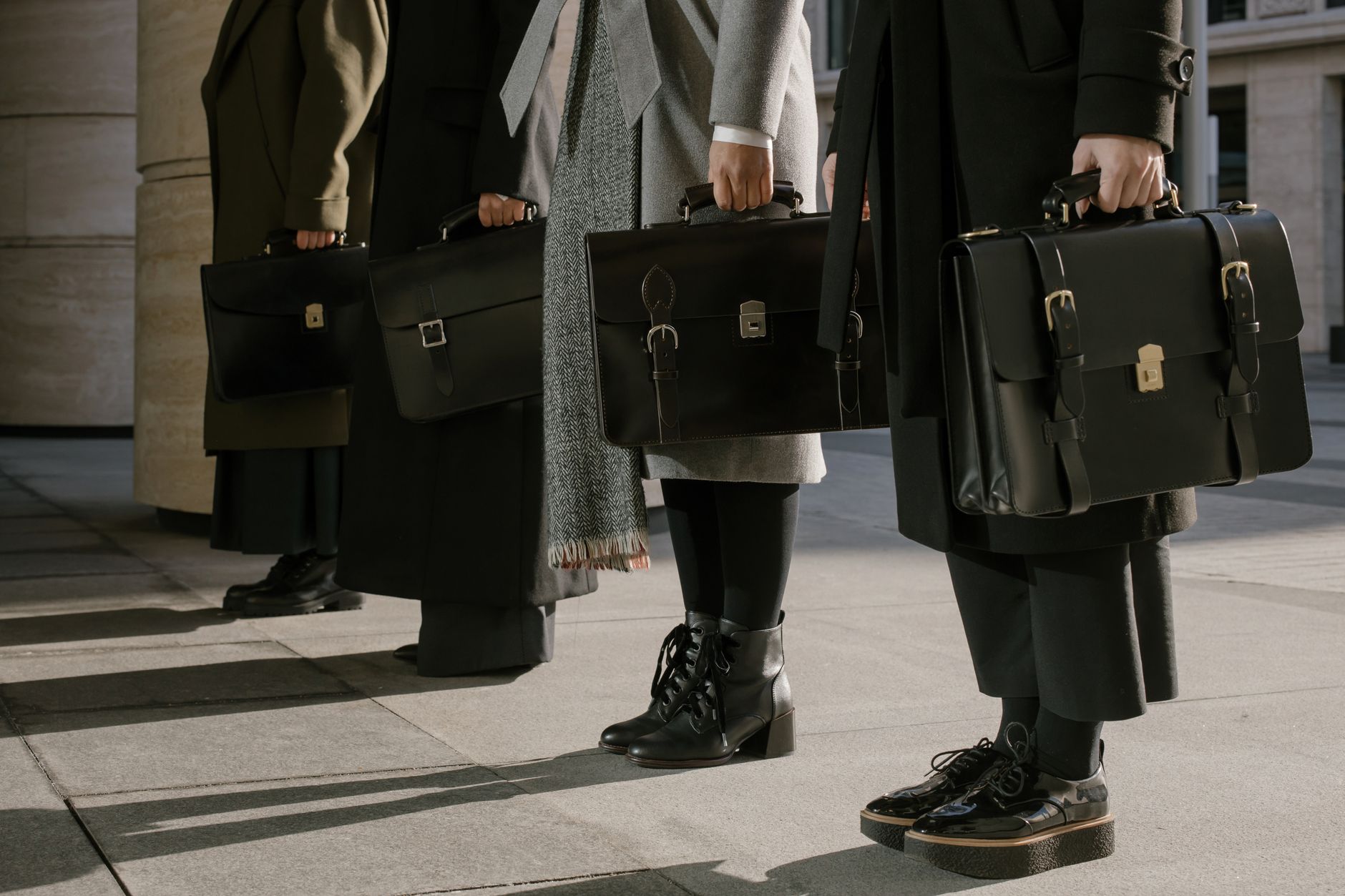
Briefcase, leather satchel, messenger bag or backpack: the bag you choose changes the line of a suit almost as much as the cut of the jacket. Here is how to choose a bag to wear with a suit depending on the occasion, the material and the colour.
The short answer
With a suit, the leather briefcase remains the most formal choice, ahead of the shoulder satchel, more versatile for daily use. The messenger bag suits a more casual, everyday use with more to carry, and a plain backpack works very well for a daily commute, as long as it avoids a sporty look. Black and dark brown remain the safest colours, matched to the shoes.
- The leather briefcase is the most formal option, suited to business meetings and ceremonies
- The shoulder satchel can be worn all day without tiring the shoulder and keeps a structured shape
- The messenger bag offers the most room for daily use, in dense canvas or soft leather
- A plain backpack, without visible straps or a loud logo, works with a suit worn casually
- Black and dark brown are the easiest colours to match with dress shoes
Comparing the bags to wear with a suit
Each type of bag suits a different use, from a very formal meeting to a busy daily commute.
| Bag type | Formality level | Recommended use | Typical budget |
|---|---|---|---|
| Leather briefcase | Very formal | Business meeting, interview | £130 to £350 |
| Shoulder satchel | Formal to semi-formal | Daily office use, business travel | £70 to £220 |
| Canvas or leather messenger bag | Semi-formal | Daily use, trips with more to carry | £50 to £180 |
| Plain backpack | Casual to semi-formal | Commute, travel with a laptop | £70 to £190 |
| Underarm clutch | Very formal to ceremony | Evening, wedding, outing with little to carry | £40 to £160 |
The leather briefcase, the most classic choice
The briefcase has been the bag most associated with a suit for decades, and it is still the safest choice for a very formal meeting, a job interview or an important business gathering. Its rigid or semi-rigid shape, often fitted with a handle and sometimes a removable strap, protects documents and a laptop well without spoiling the line of the suit.
Full-grain leather, thicker and more resistant to wear, remains the reference material for this kind of bag. Leather that is properly cared for, with polish or nourishing cream applied regularly, develops a patina that improves its look over the years rather than damaging it. Lined seams and reinforced corners are the first details to check on a model meant for daily use.
The briefcase is most often carried by hand, at the side of the body, or tucked under the arm for the flattest models. A removable shoulder strap, when a model offers one, helps on a longer trip without giving up the structured shape typical of this format.
The shoulder satchel, the most versatile format
The shoulder satchel sits between the very formal briefcase and more casual bags. Worn across the body or on one shoulder, it frees both hands, which matters on a commute by public transport or by bike. Its shape stays structured enough to go with a suit without breaking the line of the outfit.
Most satchels designed for professional use close with a buckle or a flap, with a padded compartment for a laptop and smaller pockets for accessories, a charger, a pen, a work pass. Leather remains the most common material for this format, but dense coated canvas, lighter and less sensitive to damp, also suits daily use very well.
The length of the strap is worth adjusting carefully. Worn too long, the satchel swings against the leg while walking, and too short, it rides up towards the chest and loses its neat look. Most models offer a buckle or hole adjustment, best set once the suit jacket is on, since the thickness of the fabric slightly shifts the bag's position.
The messenger bag, for daily use with more to carry
The messenger bag differs from the satchel in its softer shape and longer strap, worn diagonally across the body rather than on one shoulder. This format suits anyone who carries more than just a laptop and documents each day, a change of clothes, a packed lunch or an umbrella included.
In dense canvas, often coated to resist rain, the messenger bag stays light and works as well with a casual suit as with a dressier outfit, provided the colour stays plain. In soft leather, it moves closer to the briefcase in formality while keeping the freedom of movement that comes with a cross-body strap.
Volume matters as much as the material. An oversized messenger bag, built for weekend use, spoils the line of a suit once loaded. Models built for professional use stay flatter, with a slim main compartment and a few outer pockets, rather than one large, expandable bag.
Can you wear a backpack with a suit?
The question comes up often, since a backpack frees the back and spreads the weight better than a bag carried on one side, a real advantage on a long commute or by bike. The answer mostly depends on the model chosen. A hiking or sports backpack, with its compression straps and bright colours, clashes with a suit no matter how well the jacket is cut.
A plain backpack, in leather or dense canvas, in a solid colour and without a loud logo, changes the picture entirely. Its flatter, more structured cut than a sports backpack, often designed from the start for professional use, suits a suit worn casually, without a double-breasted jacket or waistcoat. For a bike commute especially, our guide to the cycling commuter backpack covers the waterproofing and comfort to look for.
For a very formal meeting, a ceremony or a job interview, though, a briefcase or a satchel remains the safer choice. Even a plain backpack keeps a more casual feel that suits a suit worn daily better than formal wear.
What colour and material to choose
The simplest rule for matching a bag to a suit is to pick up the colour of the shoes. A black bag with black shoes, a brown bag with brown shoes: this pairing remains the most reliable guide, ahead of the colour of the suit itself. Navy and charcoal complete this understated palette and go with most suits.
Full-grain leather remains the material most associated with a suit, for its look and its ability to age by developing a patina rather than wearing out. Dense canvas, coated or lined with a membrane, offers a lighter, often more affordable alternative, with better resistance to rain, at the cost of a less dressy look than leather.
Our materials and labels section covers the trade-offs between leather, synthetic materials and long-term durability. A good quality bag, properly cared for, lasts through several years of professional use, which cuts down on frequent replacement and repeat purchases, a point ADEME also makes about everyday clothing and accessories.
What bag to choose depending on the occasion
At the office, every day
The shoulder satchel or a soft leather messenger bag suit daily use best, for their balance between formality and comfort. A padded laptop compartment and a few pockets for accessories are usually enough for a working day.
For an interview or an important business meeting
The leather briefcase remains the safest choice. Its structured shape and well-kept material give off an impression of seriousness that particularly suits this kind of meeting, where a first impression matters.
For a ceremony or a wedding
A small leather satchel or a clutch is usually enough, since what you need to carry is often limited to the essentials. A bag loaded with outer pockets clashes with formal wear; our guide to men's coat brands covers the same understated approach for the winter outerwear that often goes over a suit at a ceremony.
For a commute on foot or by bike
A plain backpack, in leather or dense canvas, frees the back without breaking the line of the suit, as long as sporty models are ruled out. On the coldest days, a wool scarf and suitable gloves round out the outfit usefully without getting in the way of the bag.
In short
The leather briefcase remains the most formal bag, best kept for business meetings and interviews. The shoulder satchel offers the best balance for daily use, ahead of the messenger bag, better suited to anyone carrying more. A plain backpack, without sporty straps or a loud logo, works very well with a suit worn casually.
For colour, black and dark brown remain the safest choices, matched to the shoes. For material, well-cared-for full-grain leather or dense canvas last through several years of professional use without losing their shape.