
Key facts
A good commuter backpack for cycling holds 15 to 25 litres. It keeps water out with a coated fabric or membrane paired with a protected closure, and it carries the laptop in a padded sleeve suspended above the base. In the rain, the roll-top from Rains is still the benchmark. The toughest bag in the panel is Fjällräven's Kånken. Only bags designed for the saddle have a helmet compartment (the Faguo COMMUTER 2.0 is one of them). On a 59 euro budget, the Eastpak Padded Pak'r does the job once you add a rain cover.
- The useful capacity for a daily commute runs from 15 to 25 litres. That leaves room for a laptop and charger plus a change of clothes and lunch without the load shifting.
- Prices in the panel run from 59 euros (Eastpak Padded Pak'r) to 179 euros (top Sandqvist model), checked in October 2026.
- Two bags out of six pair a coated fabric or membrane with a closure that keeps rain out. The other four need a cover.
- A suspended laptop sleeve and a loop for a rear light matter more than sheer capacity on city streets.
In this guide
The best commuter backpack for cycling, our selection
Five miles in twenty-five minutes, with rain on every other ride in November. That is the typical commute for anyone who cycles to the office in London, Manchester or Bristol, and it is the ride we judged these bags on (mountain trails and long-haul flights belong in other guides).
Seven criteria count. Waterproofing comes first, and it depends as much on seams and closures as on the fabric. Then comes the back panel, which has to let air through, followed by a padded laptop sleeve suspended above the base. Capacity should stay between 15 and 25 litres. Three secondary criteria complete the grid (reflective details for riding after dark, somewhere to carry the helmet, empty weight).
No bag wins on all seven counts. Fjällräven's Kånken is the most indestructible pack in the line-up, but it was never drawn with a cyclist in mind. Rains wins clearly on waterproofing, at the cost of a small capacity. Eastpak and Herschel give the most space for the least money, with no serious protection from rain. Bags designed for the bike first, such as the Faguo COMMUTER 2.0 with its helmet compartment, tick the most boxes on a daily commute, which explains their rating in our table.
The advice we give most often is to start from your ride before reading any product page. Twenty minutes in the rain calls for a different bag from a weekend gravel or mountain ride. A commuter who carries a laptop with spare clothes and lunch every day has other needs again.
Bike backpacks for work compared side by side
Each row is the brand's reference model for daily urban use, at the list price shown on the official site. Where a brand offers several sizes, we kept the one that takes a laptop and a change of clothes.
| Bag | Rating /10 | Price | Capacity | Waterproofing | Best feature |
|---|---|---|---|---|---|
| Eastpak Padded Pak'r | 7.7 | €59 | 24 L | Plain polyester | Price and warranty |
| Herschel Little America | 7.5 | €75 to €110 | 25 L | Plain polyester | Buckled flap and 15-inch laptop sleeve |
| Rains Rolltop | 7.8 | €99 to €135 | 13 L | PU-coated fabric, roll-top closure | The most waterproof |
| Faguo COMMUTER 2.0 | 8.3 | €100 to €120 | 16.4 L | Coated nylon, PVC membrane | Helmet compartment and 13-inch laptop sleeve |
| Fjällräven Kånken | 8.0 | €105 | 16 L | Water-repellent Vinylon F | The toughest fabric |
| Sandqvist | 7.6 | €139 to €179 | 22 L | Water-repellent canvas | The largest capacity |
List prices checked on the brands' official websites in October 2026, capacity as stated by the brand for the reference model. Overall rating for the Mode Durable bags category, bags listed from cheapest to most expensive.
On a bike, extra capacity only helps when the bag is full and strapped tight, something product pages rarely mention. The Eastpak and Herschel models carry more with their 24 and 25 litres, but their uncoated polyester lets water in at the first proper shower. Half empty, they shift around in corners.
Compact bags hit their limits just as fast. The base Rains Rolltop stops at 13 litres. The Kånken and the COMMUTER 2.0 sit around 16 litres, while the Eastpak Padded Pak'r (24 L), the Sandqvist (22 L) and the Herschel Little America (25 L) offer far more. A laptop and charger fit into 16 litres next to a spare jumper and a lunch box, with no room to spare. A trip to the gym after work adds trainers and a towel, and at that point you need a well-strapped 22 to 25 litre bag.
Waterproofing, the first test in the rain
Riding exposes a backpack to rain from the front and from above, then to spray from the back wheel underneath. A water-repellent fabric holds for about ten minutes. After that, water finds its way in through the seams and zips, then through the main opening.
Fabric and membrane
The plain polyester on entry-level bags soaks up water once it is saturated. Coated nylon or a fabric backed by a membrane stops water passing through the cloth (that is how the PVC membrane on bike-specific city backpacks works, and the PU coating on Rains bags too). The Vinylon F on the Kånken is dense and dries quickly, without being waterproof.
Those coatings have a downside. PVC and PU make the fabric harder to recycle at end of life, so the most waterproof bag is rarely the easiest to recycle. Our materials and labels section looks at the trade-off between protection and what happens to a bag afterwards.
Seams and zips
Most bags give way at this point. An unsealed seam lets water in through every needle hole. Look for taped or welded seams. Zips should be coated or hidden under a flap. On top of the bag, a bare zip channels rainwater straight inside, laptop included.
The roll-top closure
Fastened with a buckle or clip, a rolled top is still the safest closure. Three rolls are enough to keep out driving rain. Rains has made it a signature, hence the top spot for its Rolltop on this criterion. Ortlieb and Chrome Industries build their cycling rucksacks around the same principle, Chrome with its seatbelt-style buckle. In return, you reach your things more slowly than with a zip.
On a twenty-minute ride in the rain, a plain polyester bag lets water reach the laptop. A coated fabric with a protected closure keeps everything dry, and that construction detail counts for more than the price tag.
In all weathers, a 15 euro rain cover protects any uncoated bag. It looks less elegant than a waterproof fabric and does the job perfectly well on a twenty-minute ride.
The details that matter on a commuter bag
Once the rain is dealt with, four details decide whether a bag goes out every day or ends up in the cupboard. The table below gives the thresholds we use for a daily commute.
| Criterion | Recommended threshold | Why | Examples in the panel |
|---|---|---|---|
| Capacity | 15 to 25 L | Room for the laptop and a change of clothes without loads shifting | Kånken 16 L, Sandqvist 22 L, Eastpak 24 L |
| Laptop sleeve | Padded, raised base | Protects the screen when the bag is put down | Herschel up to 15 inches |
| Helmet | Dedicated compartment or straps | No carrying the helmet by hand at the office | Rare, limited to bike-specific bags |
| Waterproofing | Coated fabric or membrane | Keeps the contents dry in a downpour | Rains Rolltop, PU-coated fabric |
| Back panel | Mesh foam or air channels | Limits sweat on your shirt | Sandqvist, padded back |
| Visibility | Reflective strips or light loops | Makes the cyclist visible from behind at night | None, add a clip-on light |
Thresholds set by the editorial team for a home to work ride of 3 to 10 miles, features checked on the brands' official sites in October 2026.
A back that breathes
After fifteen minutes of effort, a flat back panel in solid foam sticks to your T-shirt. Bags designed for the bike use mesh foam or channels to let air move between the pack and your spine. With its flat back and thin straps, the Kånken is the weakest in the panel here. The Sandqvist does better thanks to its padded back.
The laptop sleeve
It should be padded on every side and suspended, meaning it does not touch the bottom of the bag. When you drop the bag a little hard by your desk, the base takes the knock and the screen stays safe. A 13-inch sleeve covers most light work laptops, and most of the compact bags in the panel stop there. Owners of a 15-inch laptop should look at the Herschel or the Sandqvist instead. As for the classic Kånken, it has no dedicated sleeve at all. Two small details help every day, internal pockets for a charger and keys, and a quick-access pocket for a phone and pass.
Common omissions, from rear lights to helmets
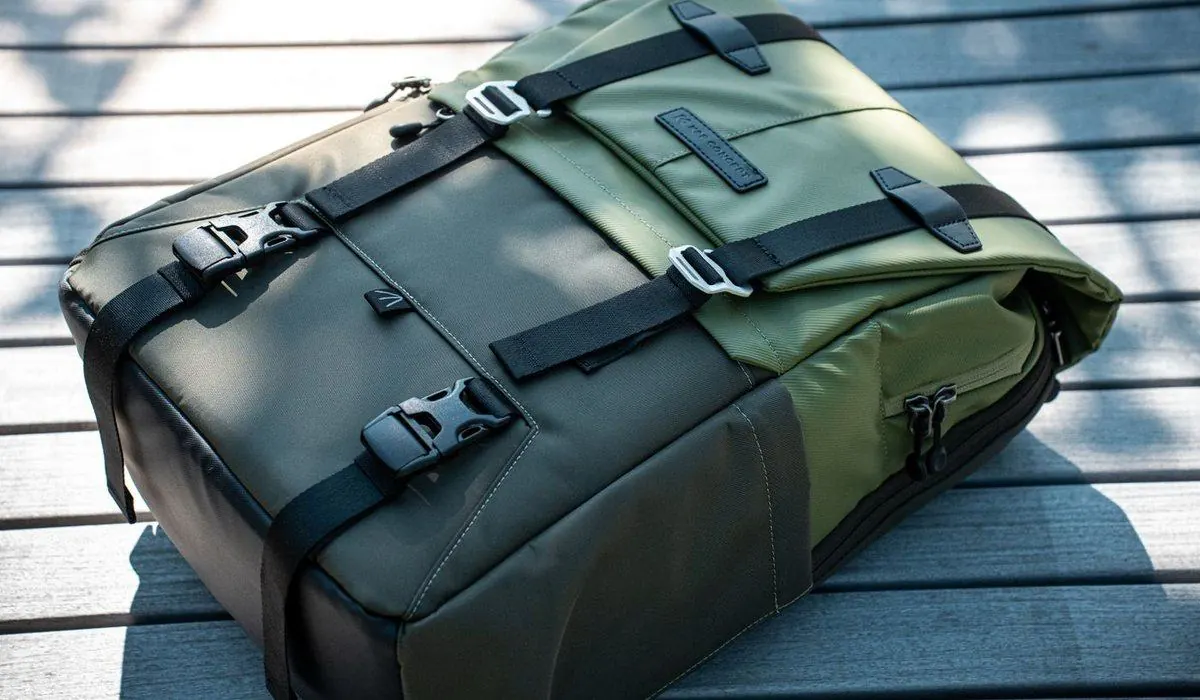
Urban bags favour a clean look and rarely carry reflective strips. None of the bags in the panel makes it a selling point. The fix is to choose a bag with a loop at the back to clip on a rear light. The helmet is the other common omission. Only bags designed for the saddle give it a compartment, the rest leave you strapping it outside or carrying it by hand. Finally, aim for an empty weight under 900 grams. At about 300 grams, the Kånken is the most lightweight of the six.
Then there is durability. Two rides a day and two hundred days a year is the routine of a commuter bag. Wear at the friction points is what eventually kills it, especially at the bottom corners and the strap anchors, as well as on the slider of the main zip. Dense nylon and box-stitched straps last for years, all the more so with metal sliders. Shoulder foam that flattens after three months tells you the bag will be retired well before it wears through. Fjällräven repairs its bags and Eastpak offers a long warranty, two policies that change the sums over five years.
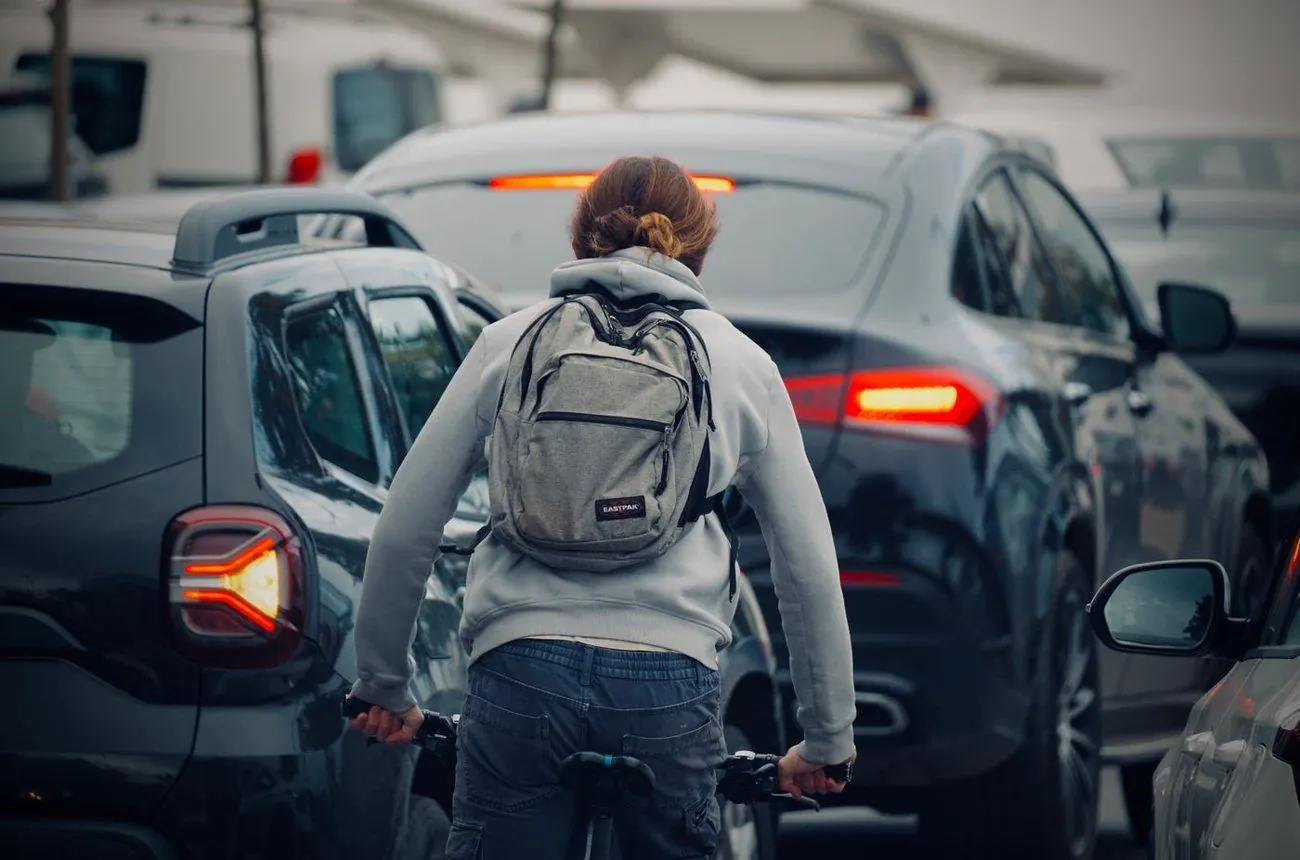
The bag is only part of what you wear on the bike. Straps rub your shoulders on every pedal stroke, and that is where cheap fleece pills first. A sweatshirt that doesn't pill under the straps is worth the money if you ride every day. On your feet, sneakers that last handle pedal friction better than a thin vulcanised sole, and our ranking of the best sneaker brands for men goes through them model by model. For the rest of your everyday bags, from totes to weekend holdalls, the same rules on fabric and seams apply.
Backpack or pannier for an urban bike?
The question comes up as soon as you ride for more than twenty minutes. A backpack stays on you from the bike shed to your desk, whereas a pannier clips onto the rack and frees your back. When an urban bike has a rear rack, both make sense. It all depends on distance, on how heavy your things are and on what you do once you get off the bike.
Why a backpack works
- On the Tube as in a meeting, a backpack follows the cyclist with nothing to unclip.
- No rack is needed, an advantage on road bikes and gravel bikes as well as folding bikes.
- Your things are safer from theft when you stop, since the bag never leaves your shoulders.
- It costs less than a pair of waterproof panniers from a specialist brand.
Why a pannier works
A pannier moves the load onto the bike. Above five kilos or six miles, the comfort gain is clear, and your back stays dry even in high summer. Specialist cycling brands (Ortlieb, Vaude, Thule, Basil) dominate this aisle with single and double panniers, often waterproof thanks to a coated fabric and a roll-top. A double pannier spreads the weight on both sides of the rear wheel and steadies a loaded bike. It is awkward to carry on a shoulder once you reach the office, which is its main weakness.
The convertible pannier backpack
In between, the convertible pannier backpack is worn on the back and hooks onto the rack with retractable clips. Ortlieb and Vaude make several, built like a 20 to 25 litre dry bag, and Thule has its own take. The compromise has a cost. The hooks add weight and can press into your back, and the straps are often more basic than on a proper city bag. None of the bags in our selection converts, which penalises anyone who switches between a rack and walking.
And on an e-bike?
With electric assistance you sweat less and ride further (often 10 to 15 miles each way) and faster. Wearing a backpack becomes comfortable again, provided you tighten the chest strap, because speed amplifies the sway of a badly adjusted bag. For longer rides and heavy loads, the pannier wins back the advantage. Bikepacking, with its bags on the frame and saddle, answers a need for travel that falls outside this guide.
Choosing a commuter backpack for cycling by ride
Every day with a laptop
Look for a compact bag designed for the bike, tight to your back, with a reinforced 13-inch sleeve and somewhere to put the helmet. In our panel the Faguo COMMUTER 2.0, at 100 to 120 euros, ticks those boxes with 16.4 litres and nylon backed by a PVC membrane. Outside the panel, city rucksacks from Chrome Industries or Ortlieb follow the same logic, with a roll-top as a bonus. Whatever you pick, check the chest strap, essential to stop the bag swinging in corners.
Rain whatever happens
Take the Rains. Its Rolltop, in coated fabric with a rolled closure, is the most waterproof bag in the panel, at 99 to 135 euros depending on size. The base model holds only 13 litres, which forces a choice between the jumper and the lunch box.
Under 60 euros
At 59 euros, the Eastpak Padded Pak'r offers 24 litres and a long brand warranty. Its polyester won't survive a downpour, so you need to add a rain cover and accept a back with no ventilation.
Lots to carry
The Sandqvist (139 to 179 euros) and the Herschel Little America (75 to 110 euros) are the two largest bags in the panel. The first holds 22 litres, the second 25. The Sandqvist has the better finish, while the Herschel takes a 15-inch laptop. Without a cover, neither handles rain well.
Ten years of use
Fjällräven's Kånken, at 105 euros. Its Vinylon F resists abrasion better than anything else in the panel and the bag is easy to repair. In exchange you have to live with thin straps and a flat back, less pleasant beyond twenty minutes in the saddle.
The right bag for your commute
For a daily bike commute with a laptop, the commuter backpack for cycling we would pick is a model designed for the saddle that keeps the helmet in its own compartment and the laptop in a suspended sleeve, such as the Faguo COMMUTER 2.0 (8.3/10). You accept a 16.4 litre capacity when Herschel reaches 25 litres (24 for Eastpak, 22 for Sandqvist).
On waterproofing, nothing in the panel matches Rains. At 59 euros, the Eastpak Padded Pak'r is the best price, rain cover extra. The Fjällräven Kånken is the one you keep for ten years. From around six miles or five kilos of kit, a pannier relieves your back more than any backpack.
Frequently asked questions
What is the best backpack for cycling to work?
The best one is the bag that suits your ride. For daily use, aim for 15 to 25 litres and a coated fabric or membrane, with a padded laptop sleeve and somewhere to carry the helmet. The Rains Rolltop is the most waterproof in our panel and the Fjällräven Kånken the toughest, the Eastpak Padded Pak'r the cheapest. In our table, bags designed for the bike come out on top because they combine the most of these criteria.
What capacity do I need for a bike commuter backpack?
Between 15 and 25 litres for a home to work ride. The 16 litres of a Kånken are enough for a laptop and charger plus a change of clothes. Above 25 litres the bag starts behaving like travel luggage. The load shifts and the straps pull on your shoulders.
Which cycling backpack is waterproof?
In our panel, the Rains Rolltop is the most waterproof thanks to its PU-coated fabric and roll-top closure, for 99 to 135 euros. Ortlieb and Chrome Industries also make waterproof roll-top rucksacks. The Eastpak Padded Pak'r and the Herschel Little America, in plain polyester, need a rain cover (around 15 euros).
Can I carry a laptop in a bike backpack?
Yes, provided the laptop sleeve is padded and suspended above the base. The Herschel Little America goes up to 15 inches, while most compact bags stop at 13 inches. Fjällräven offers no dedicated laptop sleeve on the classic Kånken.
Is a backpack or a pannier better for cycling to work?
For a ride under six miles with a laptop and a change of clothes, a backpack is enough. Beyond six miles or five kilos of kit, it is better to move the load onto the rack with one or two panniers. Convertible models from Ortlieb or Vaude do both, at the cost of hooks that add weight.
Are there vegan cycling backpacks?
Yes. Most commuter bags are made from synthetics (nylon, polyester, coated fabric), with no leather. The Faguo COMMUTER 2.0 is certified vegan by PETA, and Rains bags, in PU-coated fabric, also do without leather. Just check the trims, as some brands still use leather tabs.
Our method
The data in this guide is public, and each item can be checked at its source.
- Prices are recorded on the brands' official websites in October 2026, excluding promo codes and sales.
- Compositions, recycled material percentages and places of manufacture are those shown on product pages and in the reports published by the brands.
- Durability is assessed from verified customer reviews that mention wear, pilling, sole separation or fading.
- The labels cited (B Corp, GOTS, OEKO-TEX, GRS, Fair Wear) are checked against the public registers of the certifying bodies.
- Services that extend product life (repair, take-back, second hand) are recorded from the brands' official pages.
Sources

About the author
Textile engineer
Léa Fontaine graduated from ENSAIT, the textile engineering school in Roubaix. She spent six years in product development for luggage and technical clothing manufacturers, where she ran abrasion and colourfastness tests before production. At Mode Durable she covers materials, recycling processes and certifications, which she checks against the register of the body that issues them.