

Two parkas can carry the same price tag and the same cut in a photo, yet one keeps you warm down to minus ten while the other lets the cold in as soon as the wind picks up. The difference never shows on the composition label, it sits in the fill, the lining and a handful of construction details. Here is how to read a product sheet to choose a genuinely warm parka.
The short answer
A warm parka is judged first on its fill: down, from 600 cuin up, insulates best for its weight but fears damp, while synthetic insulation keeps part of its warmth wet. The lining (sherpa, fleece) adds strong felt warmth on the chest and hood. The outer fabric matters too: a hydrostatic head of at least 5,000 mm keeps the rain from soaking the fill.
- Down's fill power is measured in cuin: below 550 the down is ordinary, from 650 it is good, above 750 it is high-end
- Synthetic insulation weighs more for the same warmth, but keeps most of its insulating power once wet, unlike down
- A sherpa or fleece lining on the chest and inside the hood traps body heat without adding much weight
- An outer fabric rated at least 5,000 mm, with taped seams, protects the fill from city rain
- A mid-thigh parka covers the lower back and the top of the thighs, the two areas that cool fastest when standing still
Why two parkas at the same price don't keep you equally warm
A parka's warmth comes down to three things a photo never shows: the nature and amount of the fill, whether there is an insulating lining, and how waterproof the outer fabric is. A lightly filled parka sold with an oversized cut and a big hood can look just as warm as a properly filled technical parka, without being anywhere near it.
Wind and damp matter as much as the stated temperature rating. A generous fill is wasted if the outer fabric lets air in through the zip or the cuffs, and down that is very warm when dry loses much of its insulating power the moment it gets rained on. Choosing a warm parka means balancing these three factors against the climate you actually face, dry and cold or damp and mild.
Fills compared
The fill is the first thing to check, often mentioned only briefly on the product sheet or in the detailed description.
| Fill | Warmth for the weight | Behaviour when wet | Care | Who it suits |
|---|---|---|---|---|
| Down, 600 cuin and above | Very high | Loses its loft once wet | Delicate wash, dry with tennis balls | Severe dry cold, minimal weight |
| Synthetic insulation | Good | Keeps most of its warmth wet | Easy machine wash | Damp winters, tight budget, easy care |
| Recycled synthetic insulation | Good, on par with virgin fill | Same behaviour as standard synthetic | Easy machine wash | Same use, with a recycled raw material |
| Sherpa or fleece lining, no thick fill | Moderate | Dries very fast | Very easy wash | Mid-season, cold but dry days |
High fill-power down wins on pure warmth, provided it stays dry: its fibres trap air better than any other material for a given weight. Synthetic insulation weighs more for equivalent warmth, but it keeps insulating even wet, making it a safer choice in a rainy city. Recycled insulation, made from plastic bottles or textile offcuts, performs on par with virgin fill, with a lower material footprint, a point that shows up increasingly on the product sheets of brands focused on durability.
An insulating lining on its own, without a real thick fill, comes last for a harsh winter: it suits mid-season or cold, dry days, not prolonged severe cold.
The outer fabric, a shield against wind and rain
The warmest fill is wasted if the outer fabric lets water and wind through. For a winter parka in town, a hydrostatic head of 5,000 to 15,000 mm, with taped main seams, is enough to protect the fill from ordinary rain. Our guide on waterproof ratings explains how to read that figure and what the fabric's construction changes.
Wind matters too. A tightly woven outer fabric (ripstop or taffeta, depending on the brand) cuts the wind, whereas a looser weave lets air pass through the fill and carry off body heat. A two-way zip and flaps over the pockets cut down on the draughts that get in where they usually do, at the centre of the parka and through the pockets.
The inner lining, the warmth you feel right away
The lining changes how warm the parka feels the moment you put it on, before your body has even warmed it up. A sherpa lining, made of faux fur loops, or a fleece lining on the chest and inside the hood traps warm air against the skin. It is often this, more than the fill, that makes the felt difference between two parkas with a similar fill.

A taffeta or smooth polyester lining, thinner, slides easily over a jumper but adds little warmth on its own. It suits a parka that is already well filled, where the lining mainly serves comfort and ease of putting it on, not insulation.
Length, how much of the body to cover
The longer a parka, the more exposed surface it covers, in particular the lower back and the top of the thighs, two areas that cool fast when standing still, waiting for a bus for example. A mid-thigh parka strikes the best balance for everyday city use, between protection and freedom of movement.
A shorter parka, at hip length, suits physical activity such as cycling or brisk walking, where movement generates its own warmth and a long parka would get in the way of your legs. Conversely, a long parka, below the knee, maximises coverage for standing outside for long periods, at the cost of more hindrance when walking fast or cycling.
The details that trap warmth
The hood
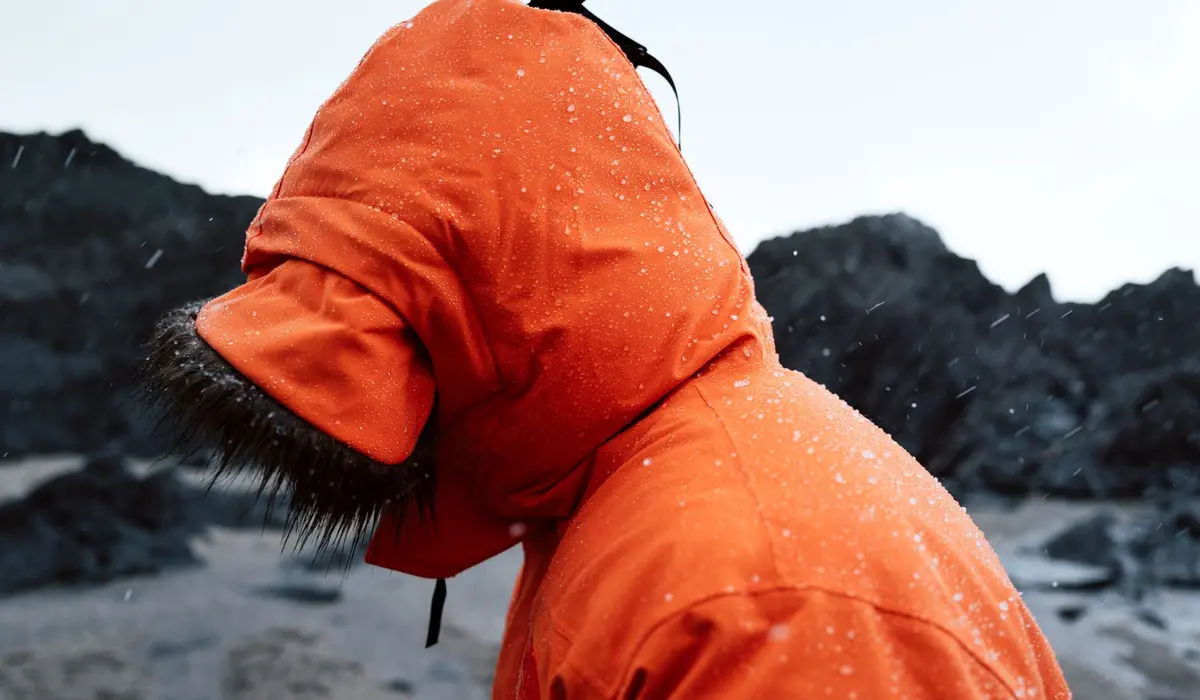
A hood adjustable with a drawcord or a rear toggle fits the head better and stops cold air getting in from above. A hood lined with sherpa or trimmed with faux fur also shields the face from the wind, a detail that matters as much as the body's fill in severe cold.
The cuffs and hem
Snug cuffs, ribbed or with an adjustable tab, stop cold air travelling up the arms. A drawcord at the waist, or a second one at the hem, holds in the warmth built up inside the garment and stops draughts rising from below when the wind blows upward.
The collar
A high collar, or even a flap that comes up to the chin, protects an area that is otherwise poorly covered. Paired with a scarf or a roll-neck worn underneath, it closes off the last gap the cold can get through.
How to choose your warm parka based on your profile
You go out in severe dry cold
Go for down with high fill power, 650 cuin or more, a mid-thigh length and a lined hood. Dry cold preserves the down, which then performs at its best. Our guide to a wool jumper that doesn't itch helps you choose the layer worn underneath.
You live in a damp city
Synthetic or recycled insulation copes with rain better than down, and an outer fabric rated at least 5,000 mm remains essential. Our comparison of parka, puffer jacket or wool coat covers the other options for a rainy winter.
You are active outdoors, cycling or on foot
Choose a shorter length, at hip height, that doesn't get in the way of walking or pedalling, with a light lining rather than a thick down fill: physical activity generates its own warmth, and a parka that is too insulating would make you sweat.
You are on a tight budget
Synthetic insulation gives a good warmth-to-price ratio and easy machine care, where quality down costs noticeably more. Price differences mostly follow the down's fill power and the outer fabric's quality, more than the brand. Our ranking of the best men's coat brands compares several price levels.
Our advice
For a genuinely warm parka, start with the fill: down at 600 cuin and above for dry cold, synthetic insulation for a damp winter. A sherpa or fleece lining and a waterproof outer fabric round out the protection.
A mid-thigh length, an adjustable hood and snug cuffs then make the real difference to how cold you actually feel, far more than the price tag in the shop window.