

Key facts
Look for a fleece of 300 to 380 gsm in combed cotton, with less than one third polyester, ribbed cuffs containing elastane and double-stitched seams. All of this is printed on the product page and the care label, well before you look at the price. In our panel, Loom and Asphalte offer the densest fleeces. Armor-Lux and Le Slip Français rely on strong seams made in France, Faguo on a brushed fleece in partly recycled cotton and recycled polyester, Patagonia on repairing its clothing.
- A quality sweatshirt weighs between 280 and 400 gsm, and below 260 gsm the fleece stretches and pills fast.
- Pills form from short fibres, which combing removes from the cotton before it is spun.
- Up to one third polyester helps the fabric keep its shape, while above 40% the pills stay attached.
- Prices recorded in October 2026 run from 89 euros at Armor-Lux to 135 euros at Le Slip Français.
- Washing at 30 °C inside out and skipping the tumble dryer noticeably delays the first pills.
In this guide
Fabric weight, the figure to look for first
Fabric weight is given in grams per square metre (gsm). Of all the figures on a product page, it is the best predictor of how a sweatshirt will look after two or three winters. A light fleece stretches at the elbows and twists after a few washes, then loose fibres rise to the surface of the fabric, where they end up as pills.
For an everyday sweatshirt, aim for 280 to 400 gsm. Below 260 gsm, you are buying a transitional layer that will see two winters at best. A fabric above 420 gsm turns stiff and feels too warm indoors. It is also slow to dry, which sends many owners to the tumble dryer, the appliance that does the most harm to fleece.
| Fabric weight | Use | Feel | Pilling risk |
|---|---|---|---|
| Under 260 gsm | Spring and autumn, layering | Thin, soft | High |
| 280 to 320 gsm | All year round | Soft, holds its shape | Moderate |
| 330 to 380 gsm | Autumn and winter | Dense, structured | Low |
| Over 400 gsm | Winter, outdoors | Heavy, stiff | Low, but slow drying |
Reading guide based on the product pages of our panel, recorded in October 2026.
Many brands do not state the fabric weight. Two clues then help you estimate it, the total weight of the garment (often given in the brand's FAQ) and the words used to describe the fabric. Heavyweight or heavy fleece almost always signals more than 350 gsm. That is also why the Gildan Heavy Blend crewneck, a staple of promotional apparel, sells on its name as much as on its weight.
Loopback against brushed fleece
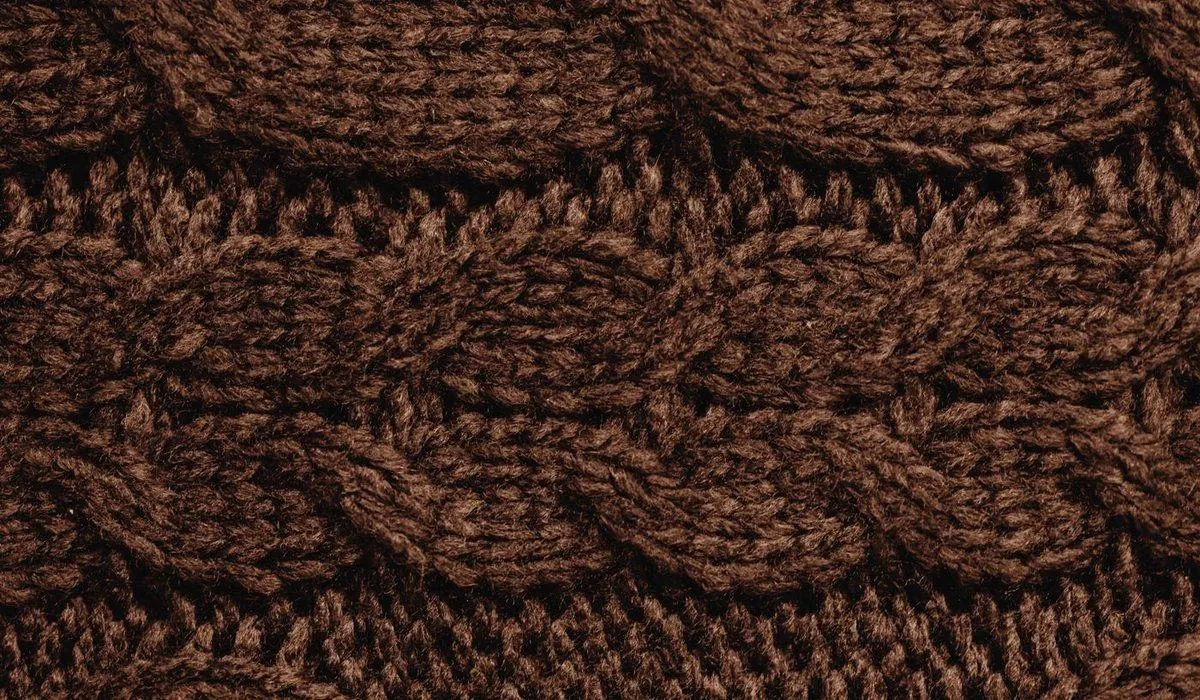
A sweatshirt is almost always knitted in fleece, a jersey with a smooth face and a back made of small yarn loops. How the fabric behaves then depends on what happens to those loops once the knitting is done.
Loopback, or unbrushed fleece
The loops stay intact. The fabric breathes better and dries faster, and it copes well with friction because the fibres stay locked into the yarn. You find it on transitional sweatshirts and on sportswear, which are a little less warm than the rest.
Brushed fleece
After knitting, brushes pass over the loops to raise a soft nap on the inside. You gain comfort and warmth at the cost of some strength, since brushing pulls out part of the fibres. A cheap brushed fleece sheds that nap as little balls from the first washes, whereas one made on combed yarn, at a sufficient weight, keeps its softness for years.
For a sweatshirt worn three times a week from October to March, we recommend brushed fleece, provided the rest of the product page stacks up. Loom and Asphalte use it on their heavy models, as do most full-zip hoodies in the panel, where brushing brings the warmth you expect from a piece worn outdoors. Loopback keeps the edge on a sports or transitional sweatshirt (often a crewneck) because it lasts longer and is more forgiving of washes that run too hot.
What combed cotton changes for a sweatshirt that doesn't pill
A pill is a small cluster of short fibres that have escaped from the yarn and rolled up on themselves under friction. They always show up in the same places. Under the arms and at the end of each sleeve first, then on the sides, where a commuter backpack rubs on every commute, and finally at the lower back.
The first remedy lies in the fibre. Before spinning, combed cotton goes through a stage that removes fibres that are too short. The resulting yarn is smoother and more even, and it sheds far less material. Carded (uncombed) cotton costs less to produce, and the buyer pays for it around the tenth wash.
Fibre length and yarn type
Fibre length matters more than anything else. The long fibres of Supima or Egyptian cotton stay locked into the yarn and resist pilling better, whereas short fibres rise to the surface from the first washes. The origin of the cotton rarely appears on the label. The word combed, on the other hand, nearly always does when the brand has used it.
On a blend, read the composition to the end. A pure combed cotton sweatshirt pills little but stretches slightly more, while a cotton polyester blend with a small share of polyester keeps its shape. The type of yarn matters as much as the fibre. A plied yarn, made of two twisted strands, gives a tighter, more durable fabric than a single yarn, as on a jersey white t-shirt where yarn quality shows after twenty washes.
Polyester plays an ambiguous role. It strengthens the fabric and limits shrinkage, and it speeds up drying too. Yet its fibres are so strong that the pills they form do not fall off and stay attached to the surface. The risk becomes visible above 40% polyester, while below one third, on a tight knit, it stays under control. Budget brands such as Gildan, Hanes and Jerzees sell pill-resistant or anti-pill pullover hoodies in 50/50 cotton polyester, and customer reviews on those products tend to praise the price more than the long-term look.
An expensive sweatshirt pills as fast as a cheap one if its fibres are short or its knit loose, and a wash that runs too hot finishes the job.
Take a typical blend from the panel, that of the Faguo MESNIL, with 68% cotton, of which 38% is recycled, and 32% 100% recycled polyester. The OEKO-TEX 100 label, found on several product pages, guarantees the absence of substances harmful to skin but says nothing about how the fabric survives washing. Recycled cotton has shorter fibres than virgin cotton, and the share of recycled polyester is there to hold the blend together. When weighing up organic or recycled cotton, fibre length remains the factor that weighs most on durability. This kind of blend is washed at 30 °C and kept away from the tumble dryer, two instructions worth following if you want a cotton polyester blend to stay pill-resistant.
The other brands in the panel make different choices. Patagonia combines organic cotton with recycled polyester, while Loom and Asphalte stick to mostly organic cotton, with no synthetic fibres added to the fleece. Recycled polyester behaves like virgin polyester when it comes to pilling, and only its proportion in the blend changes the result.
Wool jumpers and cardigans, a different knit
A wool jumper does not behave like a fleece sweatshirt. The knit is looser and wool fibres are more fragile. A merino or cashmere pullover therefore often pills faster than a good sweatshirt, above all on long sleeves and under the arms. The tendency comes from the fibre itself and has nothing to do with how well the jumper was made. The finer and softer the wool, the more it pills. Cashmere gives the clearest example of this.
Blends with silk or polyamide strengthen the knit but hold on to pills. For a cardigan or a pullover worn daily, we recommend long-staple merino on a fine gauge. A cashmere jumper should be washed by hand only at a low temperature and left to rest for a day between wears if you want to stop it bobbling in its first winter.
Six sweatshirt brands rated for pill resistance
The six brands come from our sustainable clothing selection and all sell sweatshirts designed to last, between 89 and 135 euros (below 50 euros, a decent fabric weight and combed cotton are rarely there). Each rating combines four criteria (fabric quality, finishing, price, customer reviews on how the fabric survives washing).
| Brand and model | Rating /10 | Price | Fabric blend | Strong point | Weak point |
|---|---|---|---|---|---|
| Armor-Lux | 8.0 | 89 € | Mostly cotton | Very strong seams | A more classic cut |
| Faguo, MESNIL zip-up hoodie | 8.4 | 95 € | Partly recycled cotton and recycled polyester | Brushed fleece, recycled materials, OEKO-TEX 100 | No tumble drying |
| LoomOur pick | 7.9 | 95 € | Organic cotton, heavy fleece | The densest fleece in the panel | Few colours |
| Asphalte | 7.8 | 99 € | Organic cotton, heavy fleece | A high fabric weight for the price | Pre-order lead times |
| Patagonia | 7.7 | 110 to 130 € | Organic cotton and recycled polyester | Repairs backed by the brand | An outdoor cut, not very smart |
| Le Slip Français | 8.1 | 115 to 135 € | Mostly cotton, knitted in France | Made in France | The highest price in the panel |
Six brands from our clothing panel, men's fleece sweatshirts, sorted by price, list prices recorded on official websites in October 2026. Overall clothing rating. The marker flags the densest fleece, the criterion that best protects against pilling.
Ratings range from 7.7 to 8.4 out of 10. The spread is tight because each brand has a well-defined strong point. Faguo gets the best overall clothing rating, with a median price of 95 euros and recycled materials in most of its items. Among customer reviews, we only kept those describing the fabric after several months of wear and washing, which tell you far more than a first impression on delivery. The same durability criteria guide our ranking of the best sneaker brands for men, trainers included.
Loom and Asphalte take the lead on weight. Their organic cotton sweatshirts use dense, heavy fleeces closer to 400 gsm, which resist pilling remarkably well. Le Slip Français and Armor-Lux rely on manufacturing in France and on very strong seams. Patagonia runs a repair programme, useful on a sweatshirt that spends much of its life outdoors. Premium labels outside our panel, such as Reigning Champ, follow the same logic of a heavy, tight loopback, at a higher price.
How to choose your sweatshirt in a shop, and how to wash it
In a shop or when an online order arrives, three construction details are enough to spot a sloppy sweatshirt, and the check takes about ten seconds.
- Shoulder and armhole seams should be covered or double-needle stitched, with no loose threads.
- Ribbed cuffs and waistbands benefit from 3 to 5% elastane, otherwise they sag before the rest of the sweatshirt.
- The collar and the hood should be lined or reinforced at the nape, the area that loses its shape first.
Washing then decides half of the garment's lifespan. Temperature and friction wear the fabric down with every wash, so keep both low. Wash inside out at 30 °C, with garments of a similar texture, never with jeans or towels. Dry flat or on a wide hanger (long drying on a radiator hardens the fibres). Should a few pills appear anyway, run a fabric shaver flat over the surface without pressing.
Versatile and responsible
The Faguo MESNIL at 95 euros, in brushed fleece with a fully disclosed recycled blend, or Patagonia, which combines organic cotton with recycled polyester. Both move from the city to the weekend and need careful washing to keep the fabric clean.
The heaviest fleece
Loom or Asphalte, at around 95 to 99 euros, the densest sweatshirts in the panel. Allow a full day of drying flat after each wash.
Made in France
Le Slip Français, from 115 to 135 euros, or Armor-Lux at 89 euros. The first plays on style and the second on toughness, for 26 euros less than the cheapest Le Slip Français model.
A women's sweatshirt
The guidelines do not change with the cut. A quality women's or youth sweatshirt is judged on the same fabric weight, with the same combed cotton and the same ribbing. The fit alone varies (shorter or roomier depending on the brand) and you sometimes need to go up or down a size to get the drape you want.
For hiking
Patagonia, from 110 to 130 euros. The cut is less smart, but the brand repairs its clothing, which extends the life of a sweatshirt that takes a beating outdoors.
The sweatshirt to buy this winter
Four features together mark out a sweatshirt that doesn't pill, a fleece of 300 to 380 gsm, combed cotton, less than one third polyester and ribbing with elastane. The six brands in our panel tick most of these boxes, each with its own priority. Faguo gets the best overall rating, 8.4/10, with a brushed fleece in recycled materials at 95 euros.
For the heaviest fleece, go for Loom or Asphalte. Where made in France matters more, pick Le Slip Français or Armor-Lux. Whatever the model, wash it at 30 °C inside out and leave the tumble dryer alone.
Frequently asked questions
What is the best men's sweatshirt in 2026?
It depends on how you wear it. In our panel of six brands recorded in October 2026, Faguo gets the best overall rating (8.4/10). Le Slip Français (8.1/10) is the pick for making in France, Armor-Lux (8.0/10) for strong seams. The heaviest fleece goes to Loom and Asphalte.
What fabric weight should a quality sweatshirt have?
A quality sweatshirt sits between 280 and 400 gsm. The 300 to 380 gsm range offers the best balance between structure, warmth and drying time. Below 260 gsm, the fleece stretches and pills faster.
Why does my sweatshirt pill?
Short fibres escape from the yarn and roll up under friction. Uncombed cotton, a loose knit, more than 40% polyester or a wash that is too hot all speed this up. Washing at 30 °C inside out limits it noticeably.
Does recycled polyester make a sweatshirt pill?
Recycled polyester behaves like virgin polyester. Its pills cling to the fabric more, but below one third of the blend it stays under control. Patagonia combines organic cotton with recycled polyester, a common recipe on sweatshirts designed for the outdoors.
Brushed fleece or loopback, which lasts longer?
Loopback resists friction better because its loops stay intact, which suits sport and the transitional seasons. The brushed version is softer and warmer, and lasts just as long when knitted from combed yarn at a sufficient weight. Loom and Asphalte are two examples in our panel.
How do you wash a sweatshirt so it doesn't pill?
Wash it inside out at 30 °C, with textiles of a similar texture, then dry it flat with no tumble dryer. These are the instructions printed on the care labels of brushed fleece sweatshirts. If pills appear, a fabric shaver run flat over the surface removes them.
Our method
The data in this guide is public, and each item can be checked at its source.
- Prices are recorded on the brands' official websites in October 2026, excluding promo codes and sales.
- Compositions, recycled material percentages and places of manufacture are those shown on product pages and in the reports published by the brands.
- Durability is assessed from verified customer reviews that mention wear, pilling, sole separation or fading.
- The labels cited (B Corp, GOTS, OEKO-TEX, GRS, Fair Wear) are checked against the public registers of the certifying bodies.
- Services that extend product life (repair, take-back, second hand) are recorded from the brands' official pages.
Sources

About the author
Fashion and footwear journalist
Julien Marchand has worked in menswear for ten years. He spent the first four as a sales assistant in a sneaker shop in the Marais, in Paris, advising on sizing and handling returns for peeling soles. He then freelanced for the specialist footwear press before becoming a menswear writer. At Mode Durable he covers sneakers and men's basics, and wears most of the pairs he scores for several months.