
Key facts
Blended recycled cotton wins for everyday clothing, with 8.4/10. Because it skips the crop altogether, it avoids the irrigation and the fertiliser along with most of the fibre's emissions. You will mostly find it as a blend (at Faguo as at Patagonia), mixed with virgin cotton or recycled polyester to make up for a shorter fibre. GOTS organic cotton (8.0/10), the kind used by Patagonia or Veja, keeps the edge on durability, since its longer fibre resists pilling better. To settle organic vs recycled cotton in a shop, read the composition and then the certification, GRS for recycled content, GOTS for organic.
- A conventional cotton t-shirt accounts for roughly 2,700 litres of water and around 5 kg CO2e, according to ADEME estimates.
- Textile Exchange's life cycle assessment credits organic cotton with up to 91 % less irrigation water and around 46 % lower emissions at farm level.
- Mechanically recycled cotton fibre is shorter, which is why it is blended with virgin cotton or recycled polyester.
- The GRS certification requires at least 20 % recycled content, while GOTS requires at least 70 % organic fibres.
- Most of the recycled cotton sold in shops comes from factory cutting waste, which is easier to sort than collected garments.
In this guide
Four criteria for judging a fabric
Around 2,700 litres. That is the water usually attributed to a single conventional cotton t-shirt, from irrigating the field to dyeing the fabric. The figure is quoted everywhere and is right in its order of magnitude. It explains why cotton dominates the debate on responsible fashion, but it leaves out what matters most to the person buying (how long the garment will last).
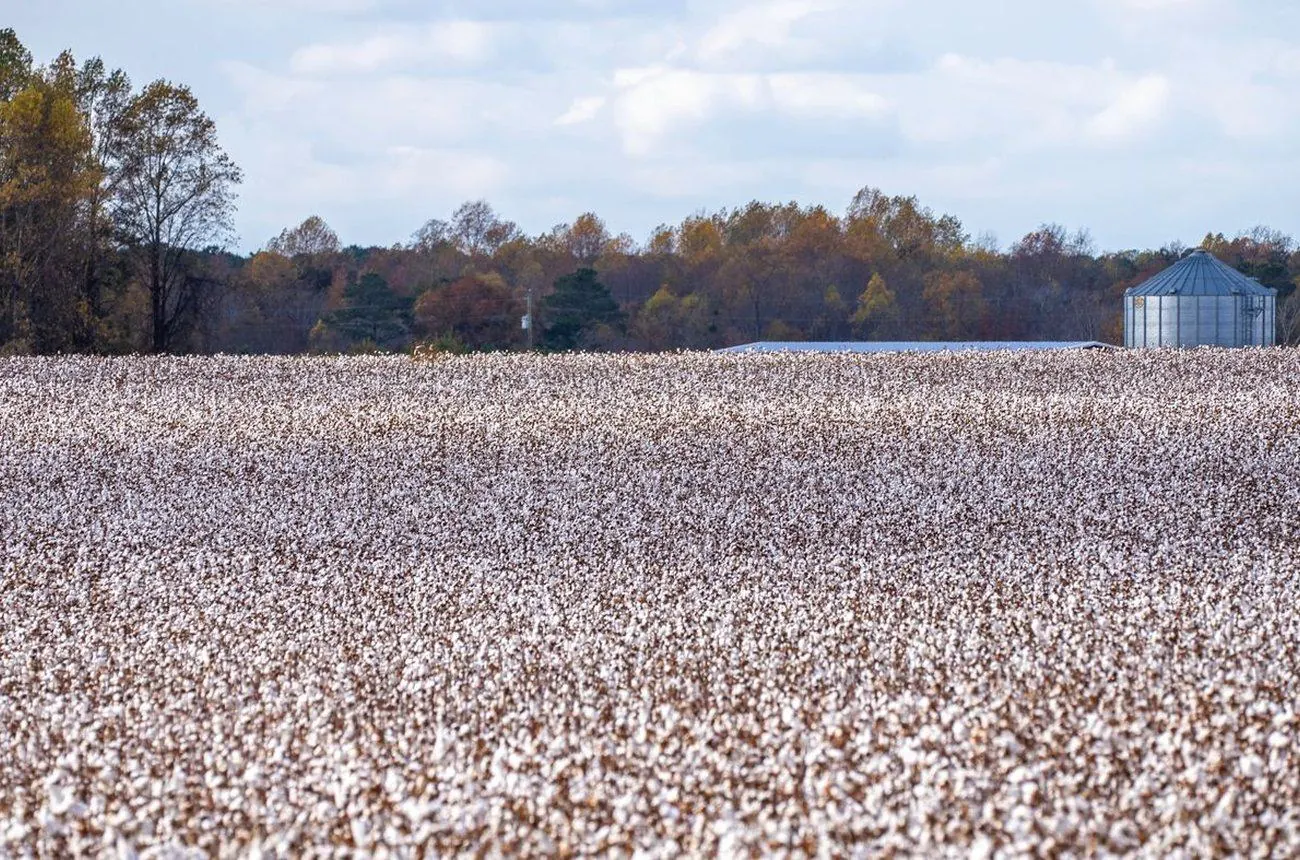
As the most worn natural fibre in the world, cotton is also the most damaging when grown conventionally. Heavy irrigation weighs on soil and water long before the yarn reaches a spinning mill, and so do synthetic nitrogen fertiliser and pesticides, which also affect the health of farm workers. Both organic and recycled cotton aim at reducing that environmental impact and the resource use behind it, at different points in the chain. Organic farming changes the way the plant is grown, while recycling removes the crop and starts again from textiles that already exist.
We judge each fabric on four criteria. Water used to produce the fibre comes first, followed by greenhouse gas emissions, always expressed in CO2 equivalent. Next is the mechanical strength of the fibre, which decides pilling and holes at the elbows as well as how the garment survives the wash. Last comes the quality of the certification, because a claim without a certificate is only a marketing claim.
Lifespan matters more than most people think. ADEME has said it for years, the strongest lever on a garment's footprint is how long you wear it. A sweatshirt worn for four winters instead of two halves its yearly impact, whatever the fibre. Buying fewer new clothes does as much for the planet, and for the future of the resource, as choosing the right raw material.
A sustainable fabric costs little to produce and lasts a long time. The two qualities rarely go together, and in the debate over organic vs recycled cotton each fibre ticks only one of the two boxes properly, as the table below shows.
Six everyday fabrics, rated out of 10
Each row uses estimates published by independent bodies or fibre producers, never figures supplied by brands. Real differences vary with the growing region and the spinning mill, or with the dyehouse, but the ranking stays stable from one study to the next.
| Fabric | Rating /10 | Water | Fibre emissions | Fibre strength | Certification and example |
|---|---|---|---|---|---|
| Blended recycled cottonOur pick | 8.4 | Close to zero, no crop | Lowest of all cottons | Average, short fibre | GRS, Faguo, Patagonia |
| Linen | 8.1 | Rainfall only in Western Europe | Low | Very good, creases | Masters of Linen, European Flax |
| Organic cotton | 8.0 | Up to 91 % less irrigation | Around 46 % lower at farm level | Good, long fibre | GOTS, Patagonia, Veja |
| Tencel (lyocell) | 7.7 | Low, unirrigated wood | Low, over 99 % of solvent recovered | Good, sensitive to abrasion | FSC/PEFC, EU Ecolabel |
| Recycled polyester | 7.1 | Very low | Around 30 % lower than virgin | Very good, can pill | GRS, RCS |
| Conventional cotton | 5.3 | Around 2,700 L per t-shirt | Baseline, around 5 kg CO2e per t-shirt | Good | None, OEKO-TEX 100 at best |
Published estimates from ADEME and Textile Exchange, supplemented by Lenzing for Tencel and by the European Confederation of Flax and Hemp for linen, checked in October 2026. Emissions cover fibre production only, excluding garment making and transport.
Blended recycled cotton leads on water and emissions and loses clearly on durability. In second place, linen benefits from European farming that needs no irrigation. Third comes organic cotton, more durable than recycled cotton yet still dependent on a field. With 5.3/10, conventional cotton comes last, almost two points behind recycled polyester.
Recycled polyester needs a careful look. Its fibre is the strongest in the table, it dries fast and holds colour well. It is still a plastic, though, which sheds microfibres in the wash, and most of it is made from bottles rather than old clothes.
Organic vs recycled cotton, criterion by criterion
The main difference between organic and recycled cotton lies in where the fibre comes from. Organic is a new fibre, grown without synthetic pesticides or fertiliser and certified from field to label. Recycled cotton made from cotton waste (factory offcuts or collected garments) is a second-life fibre. The benefits differ, which is why the one to choose depends on what you will wear.
- Long and new, the organic fibre stands up better to washing and rubbing.
- Its standard bans GMOs and synthetic pesticides as well as chemical fertilisers, which protects soil health and groundwater, along with the social conditions of growers.
- Recycling needs neither field nor irrigation, uses no seed and reuses textiles that have already been made.
- When sorted by colour, recycled fibre also avoids a fresh round of dyeing, often the step that pollutes water the most.
Water, a clear win for recycled
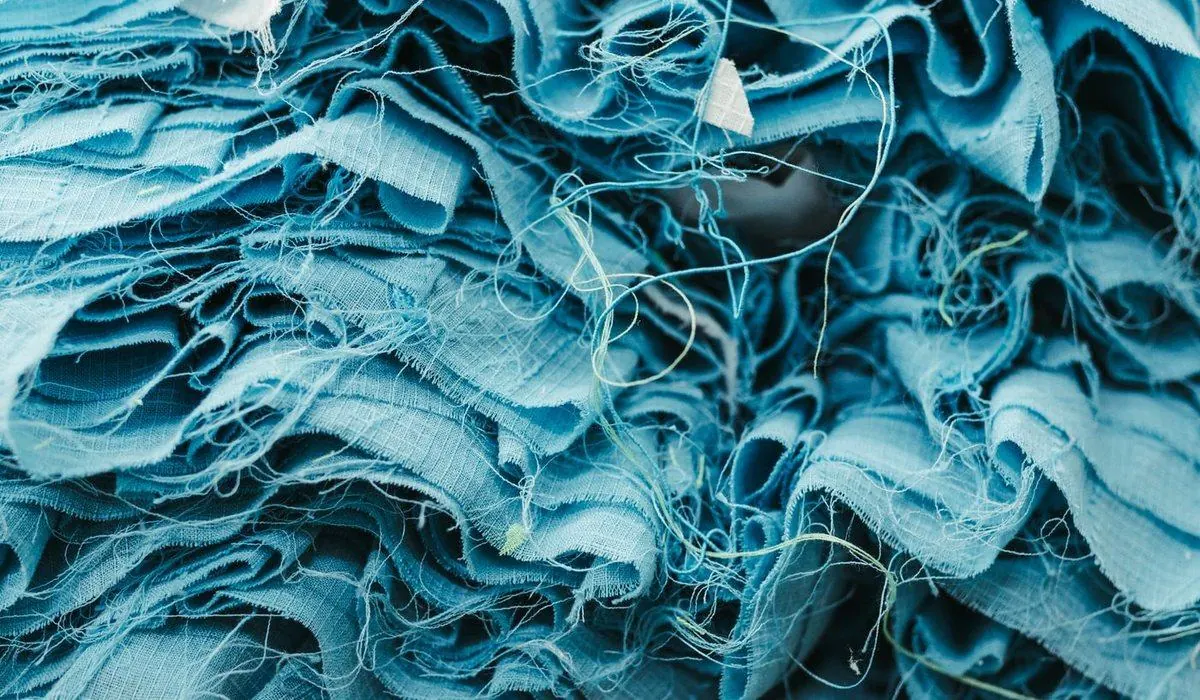
Recycled cotton is made from cutting waste or used garments, shredded and then spun again. With no field to water and no fertiliser to spread, water use is limited to processing, and dyeing disappears too if the offcuts are sorted by colour. Organic cotton cuts irrigation sharply (by up to 91 % according to Textile Exchange's life cycle assessment) because it is often rain-fed. It never gets to zero, while recycled cotton comes close.
Carbon, a gap that shrinks after sewing
Compared with conventional cotton, organic emits around 46 % less at farm level, mainly because it uses no synthetic nitrogen fertiliser. Recycled fibre does better still at the fibre stage, but it has to be collected and sorted before being transported. Once the fabric is woven and dyed, then sewn, the two end up fairly close. Garment production weighs heavily in the final footprint, whatever the starting fibre.
Which cotton has the lowest environmental impact?
Organic cotton pollutes far less than conventional cotton, because it avoids synthetic pesticides. At fibre level, recycled cotton does even better. Its real weakness lies upstream, in collection. In the UK as in France, a large share of donated clothing is exported or ends up as rags, and only a small fraction becomes new cotton yarn. So most of the recycled cotton sold in shops comes from factory cutting waste, which is easier to sort.
Durability, where organic leads
Brands rarely mention this point. Shredding fabric breaks the fibres, so mechanically recycled cotton fibre comes out much shorter than new fibre. The resulting yarn is uneven and will pill or break sooner. Hence the blends, with virgin cotton (organic by preference) or recycled polyester added to hold the structure. That is also how you get a sweatshirt that doesn't pill after three washes.
A sweatshirt in 100 % mechanically recycled cotton barely exists, and that is good news, because the blend is what makes the garment durable.
Faguo's MESNIL zip hoodie follows the recipe. Its brushed fleece combines 68 % cotton, of which 38 % is recycled, with 32 % fully recycled polyester, all OEKO-TEX 100 certified. The polyester gives structure and shape recovery, while the cotton gives comfort and a soft feel. Most fleeces sold as “recycled” follow the same logic, with a real share of recycled fibre that ranges from 20 % to more than 50 % depending on the brand. Read the composition fibre by fibre before trusting the word “recycled” printed in large type on the swing tag. Washing at 30 degrees and skipping the tumble dryer keeps the short fibre intact for longer.
Certification, two families not to confuse
The Global Organic Textile Standard (GOTS) certifies organic cotton across the whole chain, from field to label, with at least 70 % organic fibres for the “made with organic” claim and 95 % for “organic”. The Global Recycled Standard (GRS) certifies recycled content, with a 20 % threshold for certification and 50 % to put the logo on the product. Very common, OEKO-TEX 100 says nothing about where the fibre comes from. It guarantees the absence of harmful substances, which is useful information of a different kind. Our materials and labels section covers each certification one by one.
To check a label in the shop, look for the name of the standard and the certificate number. A vague “responsible cotton” proves nothing. An “organic” claim without GOTS or OCS is worth no more, and neither is “recycled” without GRS or RCS. Serious brands list the exact percentage of each material, fibre by fibre.
The alternatives to cotton (linen, Tencel, recycled polyester)
Linen is the most underrated fabric in the wardrobe. Western Europe grows close to four fifths of the world's flax fibre, mostly in Normandy and northern France, and the plant needs no irrigation in that climate. Very strong, the fibre softens with every wash. Its flaw is well known (it creases), but for a summer shirt or an overshirt it is the best choice in the table.
Tencel, Lenzing's brand name for lyocell, comes from wood grown in managed forests. Over 99 % of the solvent that dissolves the cellulose is recovered in a closed loop. Soft and light, cool to the touch, the fabric absorbs sweat well. You will also find it on running trainer uppers and on bed linen, two uses where breathability matters more than abrasion resistance. Blended with organic cotton, it creates a more fluid jersey that shrinks less.
Linings and bags are where recycled polyester belongs, along with technical pieces. It emits around 30 % less than virgin polyester and stands up to anything, but on a t-shirt worn against the skin, cotton is the better fabric. Patagonia was one of the first brands to make fleece from recycled plastic bottles, back in 1993. Most brands in the sector now use the fiber for trainer linings and bags. To limit microfibres, wash these pieces cold in a laundry bag, and wash them less often.
Five brands and how they use these fibres
A fabric is only as good as what the brand does with it. We looked at five labels known for their work on fibres, with the same overall rating as in our responsible fashion ranking.
| Brand | Rating /10 | Key material | Public proof | Weak point |
|---|---|---|---|---|
| Faguo | 8.5 | Recycled cotton and polyester | Public page on its limits, in-store take-back | Leather and non-natural pigments |
| Patagonia | 8.3 | Organic cotton | 100 % organic since 1996, Worn Wear repairs | High prices, sweatshirt €110 to €130 |
| Veja | 8.2 | Organic cotton and rubber | Made in Brazil, traceable supply chain | Little clothing |
| Le Slip Français | 8.0 | Cotton and wool | Made in France | Little recycled content |
| Armor-Lux | 7.8 | Combed cotton | Made in France, Breton top €75 to €95 | Little organic at entry level |
Ratings from our responsible fashion ranking, information checked on official websites in October 2026.
Faguo leads this panel for its transparency rather than for any single fibre. The Nantes brand publishes a page setting out what it does badly, from trainers made in Vietnam to leather still treated with non-natural pigments. It also takes back worn pieces in store against a voucher worth up to 25 % of their original price. Together with repair and second hand, that collection forms a complete loop that few sustainable clothing brands organise themselves, and those returns feed straight into recycled cotton production.
Patagonia remains the historical benchmark for organic cotton, adopted across its whole range in 1996. Its Worn Wear repair programme has long served as a model, and the brand pioneered recycled polyester. Expect to pay between 110 and 130 euros for a sweatshirt, a price the lifespan of its pieces partly makes up for.
Veja traces its organic cotton back to the growers and manufactures in Brazil. That short, checkable supply chain sets it apart from brands producing in Asia, a difference we cover in our ranking of the best sneaker brands for men. Its clothing range remains small, though.
Le Slip Français and Armor-Lux bet on French manufacturing rather than recycled fibre, a defensible choice for durability, less so for the footprint of the raw material. The combed cotton Armor-Lux Breton top, priced at 75 to 95 euros, has a reputation for lasting years. Outside our panel, Pact and Thought also work with GOTS organic cotton, as does People Tree, while Rapanui in the UK makes cotton products designed to be sent back and remade.
Which fibre for which garment
Everyday t-shirt
Blended recycled cotton or organic cotton, depending on how much pilling you tolerate. Loom sells a t-shirt at 35 euros, Faguo sells most of its recycled cotton t-shirts at 40 euros, and Le Slip Français charges 45 euros. These prices sit slightly above the middle of the market, and the extra often pays for a better-chosen fibre. Pick combed organic cotton for a white t-shirt that stays crisp, as it holds its colour and shape better (white recycled cotton needs stricter sorting).
A sweatshirt that has to last several winters
Go for a blended fleece of cotton and recycled polyester, around 350 g/m². The polyester limits stretching at the ribbed cuffs and reduces pilling. Expect 95 euros at Loom, 99 euros at Asphalte, 110 to 130 euros at Patagonia. Fabric weight and composition, shown on the product page, are what let you compare two sweatshirts at a similar price.
Summer shirt
Linen, without hesitation. It breathes and lasts, and it grows in Europe without irrigation. Creasing is part of the fabric, so there is little point spending an hour with the iron to chase it away.
Sportswear and bags
Recycled polyester or Tencel. The first for strength, the second for comfort against the skin. On bags exposed to rain, a well-chosen synthetic holds up better than cotton canvas, which soaks up water and gets heavy. Our selection of the best cycling backpack compares models on water resistance and capacity, with or without a helmet compartment.
Light summer clothing
Organic cotton in light jersey, or Tencel. A thin t-shirt wears out quickly, and the long fibre of organic cotton makes up for its thinness. Weaker at low weights, recycled cotton is better kept for heavier pieces such as a sweatshirt or an overshirt.
Which fibre to favour
For everyday clothing, blended recycled cotton is the more sustainable option, with 8.4/10. It skips the crop and almost all the water, and blending it with virgin cotton or recycled polyester corrects its short fibre. The most sustainable garment is still the one you keep, and well-chosen cotton only pays off if you wear it for several years.
Where durability comes first, we would pick GOTS organic cotton from Patagonia or Veja. In summer, linen is the lowest-impact fabric in the table. On a technical piece, recycled polyester remains the toughest, as long as you wash it cold in a laundry bag.
Frequently asked questions
Is recycled cotton better for the environment than organic cotton?
Yes on water and fibre emissions, since recycled cotton needs no crop. According to Textile Exchange, organic cotton cuts irrigation by up to 91 % and farm-level emissions by around 46 %, without reaching zero. We rate blended recycled cotton 8.4/10 against 8.0/10 for organic cotton.
Why is recycled cotton blended with other fibres?
Mechanical recycling shreds the fabric and shortens the fibre, which makes a weaker yarn. Manufacturers therefore add virgin cotton or recycled polyester, often around two thirds cotton to one third recycled polyester in a sweatshirt. That blend keeps the comfort of cotton with the structure of the synthetic fiber.
Which brands work best with organic and recycled cotton?
In our panel, Faguo (8.5/10) leads for its transparency and for recycled materials in 80 % of its pieces. Patagonia (8.3/10) adopted organic cotton back in 1996, and Veja (8.2/10) traces its organic cotton supply chain back to the growers. Le Slip Français and Armor-Lux focus mainly on French manufacturing.
How much water does it take to make a cotton t-shirt?
The estimate used by ADEME is around 2,700 litres for a conventional cotton t-shirt, mostly for irrigation. With no crop to grow, a recycled cotton t-shirt uses a tiny fraction of that. It is the clearest figure for understanding the environmental impact of conventional cotton.
Is recycled polyester a good fabric?
Recycled polyester emits around 30 % less than virgin polyester and is the strongest fibre in our table, rated 7.1/10. It does shed microfibres in the wash, so we keep it for linings and bags or blended fleece rather than pieces worn against the skin.
Is linen more sustainable than cotton?
Linen, rated 8.1/10, grows without irrigation in Western Europe, the world's leading production region, and its fibre is very strong. It beats organic cotton (8.0/10) and, by a wider margin, conventional cotton (5.3/10), but it creases. We know of no better fabric for a summer shirt.
Our method
The data in this guide is public, and each item can be checked at its source.
- Prices are recorded on the brands' official websites in October 2026, excluding promo codes and sales.
- Compositions, recycled material percentages and places of manufacture are those shown on product pages and in the reports published by the brands.
- Durability is assessed from verified customer reviews that mention wear, pilling, sole separation or fading.
- The labels cited (B Corp, GOTS, OEKO-TEX, GRS, Fair Wear) are checked against the public registers of the certifying bodies.
- Services that extend product life (repair, take-back, second hand) are recorded from the brands' official pages.
Sources

About the author
Textile engineer
Léa Fontaine graduated from ENSAIT, the textile engineering school in Roubaix. She spent six years in product development for luggage and technical clothing manufacturers, where she ran abrasion and colourfastness tests before production. At Mode Durable she covers materials, recycling processes and certifications, which she checks against the register of the body that issues them.