
Key facts
High quality sneakers have a full grain leather upper on a rubber sole that is stitched or firmly bonded, with a stiff heel counter and tight stitching at the flex points, whatever the logo on the side. Three quick tests in the shop will tell you (press the sole, pinch the heel, run a fingernail along the stitching). In our panel of 8 brands, the leather low-tops on rubber soles priced between 110 and 165 euros tick the most boxes, from Veja, Faguo, Le Coq Sportif, Caval or Adidas with the Stan Smith.
- A leather trainer on a stitched cupsole lasts 34 months on average when worn three days a week, against 11 months for a glued synthetic pair.
- The inside of the heel is the first part to fail in 41 % of negative customer reviews that mention wear.
- A pair of leather low-top trainers at 125 euros works out at roughly 3.70 euros per month of wear over its average lifespan, against more than 5.40 euros for a synthetic pair at 60 euros.
- Rotating two pairs makes each one last about 30 % longer, because the leather and the lining dry out between wears.
- A waterproofing spray applied before the first outing limits water marks and stops the leather drying out.
In this guide
The eight signs of high quality sneakers
Two pairs bought on the same day at the same price can end up in very different places. Eighteen months later, one goes in the bin with a worn-through heel and a sole peeling away, while the other just needs a bit of cream. The logo and the price tag play almost no part in that gap. Eight construction details explain it, and you can check them in two minutes with the pair in your hands.
Price alone will not pick out high quality sneakers. The same logo covers trainers at 70 euros and at 180 euros at Nike or Converse, built in completely different ways, and the same goes for Adidas and New Balance. The Converse Chuck Taylor is canvas on a vulcanised sole, whereas the Adidas Stan Smith is leather on a stitched cupsole. The two sometimes sit at the same sale price, with lifespans far apart. The name of the sports brand on the side tells you nothing about the material or how the shoe is made.
The table below ranks the criteria by their effect on durability, cross-checking 23 pairs against customer reviews that describe a specific type of wear. A leather upper on a rubber sole comes top, with up to 20 extra months.
| Criterion to check | Durability score /10 | What to look for in the shop | Recommended example | The warning sign | Lifespan gained |
|---|---|---|---|---|---|
| Leather upper on a rubber sole | 8.6 | Leather on the upper, a natural or recycled rubber sole rather than foam | Faguo PALMER, Panafrica leather models | A light sole that scratches under a fingernail | Up to 20 months |
| Stitched cupsole | 8.4 | Real stitching running through the side wall of the sole | Adidas Stan Smith | Fake stitching moulded into the rubber | 10 to 14 months |
| Full grain leather | 8.2 | Visible grain, fine and even creases after flexing | Veja Campo | Plastic look, deep creases from the first try-on | 8 to 12 months |
| Stiff heel counter | 8.0 | The heel does not collapse under thumb pressure | Le Coq Sportif leather models | A soft heel that folds in two | 6 to 9 months |
| Tight stitching | 7.8 | Short, even stitches with double stitching where the toes flex | Veja, Caval | Loose threads, stitches more than 3 mm apart | 4 to 6 months |
| Leather lining | 7.6 | Leather lining at the heel, no folds or raised seams | Leather models above 150 € | Thin textile lining that pills at the try-on | 4 to 8 months |
| Removable insole | 7.3 | An insole that lifts out and can be replaced | Veja, Le Coq Sportif | Glued insole that cannot be changed | 3 to 5 months |
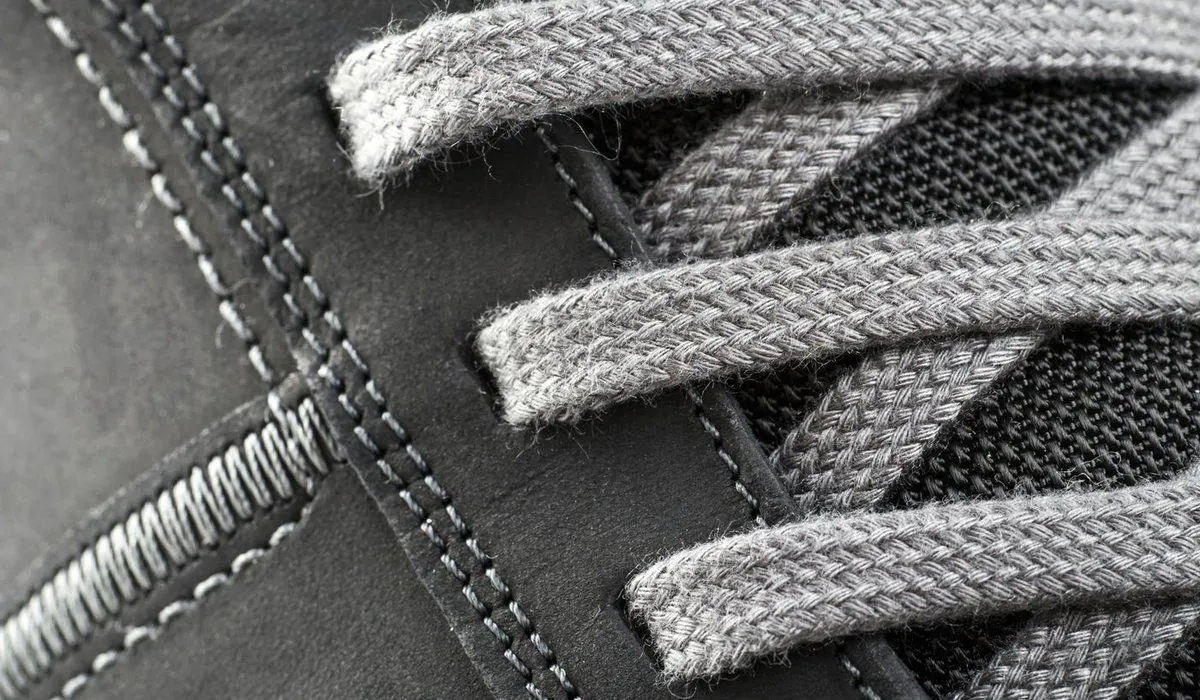
| Reinforced laces and eyelets | 7.1 | Thick cotton laces, bound or metal eyelets | Organic cotton laces, metal eyelets | Bare punched holes in thin leather | 2 to 3 months |
Criteria ranked by their effect on lifespan, estimated from 23 pairs from 8 brands and 1,140 customer reviews, gathered in October 2026. Lifespan gained compared with a pair that does not meet the criterion, for wear three days a week.
A pair that meets the first four rows will last three years in normal use, whereas a pair that meets none of them rarely makes it past a year, whatever it cost. The last four rows separate a decent trainer from one you keep for years.
What 250 euros and up buys you
Above 250 euros, much of the money goes on a name or a limited run, sometimes on a hand-distressed finish. Luxury sneakers from Maison Margiela, Lanvin, Tom Ford or Axel Arigato look great in a shop window, and some are well made. Yet we examined luxury trainers whose sole was simply glued under a textile-lined upper, as well as chunky designer models inspired by the Balenciaga Triple S whose foam midsole had flattened within a year. In those cases, the luxury price paid for the box and the branding.
At the other end, plenty of pairs between 110 and 160 euros meet six or seven of the eight criteria, from the Stan Smith at 110 euros to Caval models at 149 to 165 euros. For everyday shoes, the sensible price range starts at around 100 euros for leather and rarely needs to go higher than 170 euros. Below 80 euros, leather becomes rare. Bensimon Tennis (49 to 75 euros) are honest for what they are, canvas on a vulcanised sole made for summer and short distances. Pataugas, at 89 to 119 euros, offers more affordable leather models that sit halfway between those tennis shoes and the 120 euro leather low-tops. To pick a brand rather than learn a method, our ranking of the best sneaker brands for men compares eight brands on these same criteria, with prices checked in October 2026.
How the sole is attached
The sole accounts for half of all negative reviews about wear. On high quality sneakers, it should outlive the upper, and how long it lasts depends mostly on the way it is fixed. Three constructions share the market, and they age very differently.
The stitched cupsole
A cupsole is a rubber shell moulded in one piece, into which the upper is fitted. On good models, a line of stitching runs through the side wall of the shell and the upper, on top of the glue. You will find it on the Adidas Stan Smith and on most low-top leather trainers, from retro tennis shoes to the classic white court shoe. The shell handles flexing well and rarely comes unstuck before two years, while its raised edge keeps puddles out.
Some brands mould a fake stitch pattern straight into the rubber. A fingernail settles the question (real stitching catches, fake stitching stays smooth).
Vulcanised soles, made for canvas
Vulcanisation bakes a strip of rubber and the upper together, usually canvas. You can spot it by the smooth band that runs all the way round the shoe, as on the Converse Chuck Taylor and the Bensimon Tennis, or on most skate shoes. The result feels comfortable from day one and costs little to produce. After a season of heavy use, the rubber often splits where the toes bend and the canvas wears through in the same place, which is why skaters go through pairs so fast.
Injected foam glued under budget pairs
An EVA or injected foam sole, simply glued under the upper, is light and cushions well for the first months, then compresses. On an everyday trainer, the foam loses its shape in eight to twelve months and the glue gives way at the heel, where the foot strikes with every step. Chunky soles follow the same pattern, since a thick foam platform looks sturdy and flattens just as fast.
Turn the pair over and press the sole with your thumb. Dense rubber pushes back and springs into place. Foam gives way and keeps the print. That single test rules out half the fragile pairs on a shelf.
Upper materials, from full grain leather to synthetic
The material of the upper decides how the pair ages. Full grain leather keeps the top layer of the hide, which is also the densest part. Over time it develops a patina and handles years of creasing. Split leather is the lower layer, sliced off and often coated to imitate the grain. It costs less and cracks at the flex point within a few months. Polyurethane synthetic traps moisture and eventually peels, with no way to repair it. A real leather upper (black or white) is the single best predictor of a long life.
Suede is more vulnerable to rain than smooth leather, but it ages well if it is waterproofed on the day you buy it. Grey or navy suede also hides marks better than a pale shade. The best designed models use suede as an overlay on a main leather upper, which keeps the more delicate material away from the areas that flex the most. An all-suede upper wears through at the toe first.
The lining, the first weak spot
The lining fails first, at the heel, where the sock rubs. A leather lining lasts longer than a textile one. Below 150 euros, most pairs in the panel are lined in textile or recycled polyester, lighter and more breathable, but less hard-wearing at the heel. This is where the gap with more expensive models shows first, and a heel patch fitted by a cobbler often adds several months to a pair.
The pinch test
The heel counter is the stiff piece hidden at the back of the shoe. It holds the heel in place and stops the upper sagging. Pinch the back of the pair in the shop. If it folds in two, the trainer will have lost its shape before the summer.
Stitching and laces
- Stitches should be short and even, and double stitching where the toes flex is the sign of careful construction.
- A loose thread or a skipped stitch in the shop means a seam that will open within the year.
- Bound or metal eyelets stop the lace cutting into the leather after months of tightening.
- A thick cotton lace, in organic or recycled cotton, frays more slowly than a thin synthetic one.
The lace is also the only part you can replace for a few euros. When choosing between organic or recycled cotton, look at fibre length, which matters more than the label.
How long do high quality sneakers last, by type?
We estimated the average lifespan of six families of men's and women's trainers, worn three days a week in town, by cross-checking customer reviews that date the wear precisely against our own examination of the pairs.
| Type of trainer | Average lifespan | Cost per month at 125 € | What fails first |
|---|---|---|---|
| Full grain leather, stitched cupsole | 34 months | 3.70 € | The lining at the heel |
| Leather, glued rubber sole | 26 months | 4.80 € | The bond at the heel |
| Suede on a rubber sole | 21 months | 5.95 € | The suede at the toe |
| Canvas, vulcanised sole | 14 months | 8.90 € | The canvas at the flex point |
| Synthetic, glued sole | 11 months | 11.35 € | The coating peeling off |
| Running shoe, EVA foam | 9 months | 13.90 € | The foam compressing |
Estimates for wear three days a week, based on 1,140 customer reviews and the examination of 23 pairs, gathered in October 2026. Cost per month calculated on a purchase price of 125 €.
Spread over the months of wear, the purchase price looks quite different. A leather pair at 125 euros works out at 3.70 euros per month, while a synthetic pair at 60 euros comes to more than 5.40 euros. Running shoes are poorly suited to town. A runner from Nike or Asics, like one from New Balance, is built around cushioning tech calibrated for 600 to 800 km of running, and whole days of walking on pavements wear that foam out quickly. Once the foam dies, the comfort goes with it.
The same sum works for the rest of the wardrobe. A piece that costs more but is worn three times longer ends up cheaper, as long as you choose the right construction from the start.
Care habits that add months
A good pair badly looked after ages about as fast as a cheap one. Each of the three habits below takes less than five minutes.
- Apply a waterproofing spray before the first outing, then once a month in wet weather. Most brands recommend it for leather and suede, and it prevents both water marks and dried-out leather.
- Slip cedar shoe trees in as soon as you take the pair off. They absorb moisture and stop creases deepening at the front.
- Rotate at least two pairs. Leather and lining need 24 hours to dry, and a pair worn every day wears out 30 % faster than two pairs in rotation.
Clean the sole with soapy water rather than in the washing machine, because machine washing softens the glue and warps the heel counter. For leather, a neutral cream twice a year is enough. Once the heel starts to wear, take the pair to a cobbler before the hole goes through the lining. At the end of its life, a pair can go to a Refashion collection point, or be sold second hand if the upper is still clean.
Our sustainable clothing section applies the same method to sweatshirts and shirts as well as t-shirts, with washing advice for each fabric. Pilling is a common complaint, and our guide to the sweatshirt that doesn't pill covers it in detail.
The pairs we recommend, use by use
The models below come from the eight brands in the panel, with prices checked in October 2026. They suit city wear, and other pairs will do the job if they pass the same checks in the shop.
One pair for every day
Go for a leather low-top on a rubber sole, and buy a second pair to rotate. Faguo makes leather and suede models from 120 to 135 euros on natural and recycled rubber. Panafrica (125 to 139 euros) and the Adidas Stan Smith (110 euros) fit the same brief. The Stan Smith has a stitched cupsole in its favour, the other two a more worked upper. At that price, two pairs in rotation outlast a single pair at 250 euros.
The finest leather
Veja sells the V-10 at 155 euros and the Campo at 145 euros, with leather that holds up very well and documented production in Brazil. Caval (149 to 165 euros) plays in the same price range with understated finishes. Expect to pay 20 to 35 euros more than for an entry-level leather low-top. The lifespan is comparable, although the leather patinas better.
Under 120 euros
Le Coq Sportif offers leather models from 95 to 130 euros, some of them assembled in its workshop in Romilly-sur-Seine. For a first leather pair, this is the brand we would point you to, even though the lining is finished a notch below. Pataugas, from 89 to 119 euros, is the other option. Vulcanised canvas tennis shoes under 50 euros hold up badly for anyone who walks a lot.
A white trainer that stays fresh
Choose smooth leather over suede, waterproofed on the day you buy it. White leather wipes clean with a damp cloth, while white suede turns grey in a season. The perfect white trainer is a plain leather court shoe on a cupsole, a retro look that never dates. The Stan Smith and the Veja Campo remain the two benchmarks, and we would take the Campo for its leather, the Stan Smith for its stitched sole.
French or made in France sneakers
A French brand does not necessarily make its shoes in France. Veja manufactures in Brazil. Faguo, founded in Nantes in 2009, has its trainers made in Vietnam and says so in black and white. Le Coq Sportif assembles part of its range in its Romilly-sur-Seine workshop, which makes it one of the few big trainer brands to offer shoes partly made in France. Caval and Panafrica are French brands too, as are Bensimon or Pataugas, which says nothing about where each pair is produced.
Sneakers made entirely in France do exist, but they are rare and often cost more than 180 euros, because France has almost no sole factories left. For lifespan, where a shoe is made matters less than how it is built, and a stitched cupsole from Vietnam or Portugal will outlast a glued sole made in Europe. To compare two French brands from the panel point by point, read our Faguo or Veja head-to-head, or browse all our sneaker guides by use.
Which pair to buy for your budget
To spot high quality sneakers, look first at the upper (full grain leather) and the sole (dense rubber, well attached), then at the heel counter and the stitching. The logo and the price come second. Of the 23 pairs we examined, the leather low-tops priced from 110 to 165 euros bring these criteria together best. Faguo earns the top score (8.6/10), ahead of Veja (8.3/10) and then Le Coq Sportif (7.9/10). A textile lining remains the weak point of most pairs under 150 euros.
For the finest leather, we would buy Veja. Under 100 euros, it would be a leather model from Le Coq Sportif, and for a stitched cupsole at 110 euros or less, the Adidas Stan Smith (7.7/10). Buy two pairs and rotate them whatever the brand, since no other habit adds as many months.
Frequently asked questions
Which signs show that a pair of trainers will last?
High quality sneakers have a full grain leather upper on a rubber sole that is stitched or firmly bonded, with a stiff heel counter and tight stitching. A pair like this lasts 34 months on average when worn three days a week. Press the sole and pinch the heel in the shop, then run a fingernail along the stitching, to check these three points in two minutes.
Do you need to spend more than 200 euros on high quality sneakers?
No. In our panel, the pairs that meet six or seven of the eight criteria cost between 110 and 165 euros. Above 250 euros, you often pay for a name or a finish, and we found luxury models with a sole that was simply glued.
Where can you buy high quality sneakers for men?
The brands that meet the most durability criteria in our panel are Faguo (8.6/10, leather models from 120 to 135 euros), Veja (8.3/10, V-10 at 155 euros) and Le Coq Sportif (7.9/10, from 95 to 130 euros), followed by Adidas with the Stan Smith (7.7/10, 110 euros). All of them sell on their official sites and in shops, where you can check the sole and heel counter before you buy.
What is the difference between a cupsole and a vulcanised sole?
A cupsole is a moulded rubber shell into which the upper is fitted, often stitched as well as glued, as on the Adidas Stan Smith. A vulcanised sole is baked together with the upper, more flexible but weaker where the foot bends. A leather trainer on a cupsole lasts 34 months on average, against 14 months for vulcanised canvas.
How long does a pair of leather trainers last?
A full grain leather trainer on a stitched cupsole lasts 34 months on average when worn three days a week, and 26 months if the sole is only glued. A synthetic pair lasts about 11 months. Rotating two pairs makes each one last about 30 % longer.
How do you care for leather trainers so they last?
Apply a waterproofing spray before the first outing and rotate two pairs. After each wear, slip in cedar shoe trees. Avoid the washing machine. It softens the glue and warps the heel counter. A neutral cream twice a year is enough to feed the leather, and a cobbler can rebuild a worn heel before it goes through.
Is full grain leather stronger than split leather?
Yes, full grain leather keeps the top layer of the hide, the densest part, and handles years of creasing. Split leather, sliced and then coated, cracks at the flex point within a few months. In our table, full grain leather adds 8 to 12 months to the lifespan of a pair.
Our method
The data in this guide is public, and each item can be checked at its source.
- Prices are recorded on the brands' official websites in October 2026, excluding promo codes and sales.
- Compositions, recycled material percentages and places of manufacture are those shown on product pages and in the reports published by the brands.
- Durability is assessed from verified customer reviews that mention wear, pilling, sole separation or fading.
- The labels cited (B Corp, GOTS, OEKO-TEX, GRS, Fair Wear) are checked against the public registers of the certifying bodies.
- Services that extend product life (repair, take-back, second hand) are recorded from the brands' official pages.
Sources

About the author
Fashion and footwear journalist
Julien Marchand has worked in menswear for ten years. He spent the first four as a sales assistant in a sneaker shop in the Marais, in Paris, advising on sizing and handling returns for peeling soles. He then freelanced for the specialist footwear press before becoming a menswear writer. At Mode Durable he covers sneakers and men's basics, and wears most of the pairs he scores for several months.