


Key facts
In town, a jacket with 5,000 to 10,000 mm of hydrostatic head and taped seams is enough for most rain. Above 15,000 mm, you pay for protection that is useful in the mountains or when cycling through long downpours. The 2.5-layer membrane (8.3/10) offers the best compromise for city use, light and breathable. Coated fabric (7.6/10) remains the most waterproof for the price, at the expense of breathability.
- Hydrostatic head measures, in millimetres, the height of water a fabric withstands before a drop gets through, according to the ISO 811 standard
- A 5,000 mm jacket handles ordinary city rain, 10,000 mm a long downpour, 20,000 mm the mountains
- Breathability is expressed in grams of vapour released per square metre over 24 hours, or as an RET index, which is better when it is low
- Seams that are not taped let water in whatever the hydrostatic head of the fabric
- Since 1 January 2026, France has banned PFAS in most clothing, and therefore in the water-repellent finishes of new production
In this guide
The three numbers on a product page
A rain jacket is described with two values, sometimes three. The first is the hydrostatic head, written in millimetres or in K for thousands. The second is breathability. Sometimes there is also a class under a standard such as EN 343, which covers protective clothing against rain.
Hydrostatic head
A tube is placed on the fabric and filled with water until three drops come through. The height reached, in millimetres, gives the hydrostatic head. That is the principle of ISO 811. A fabric rated 10,000 mm therefore withstands the pressure of a ten-metre column of water.
That number seems huge for rain falling drop by drop. It is not, because the real pressure on the fabric rises sharply wherever it is compressed. Backpack straps on the shoulders, elbows resting on handlebars or sitting on a wet bench push water through the fabric far harder than rain alone.
Breathability
A waterproof jacket that does not breathe soaks you from the inside, through sweat. Brands express breathability in grams of water vapour released per square metre over 24 hours, from 5,000 g for a decent jacket to 20,000 g and more for a very breathable one. Some give the RET index instead, measured under ISO 11092, which is better when it is low. Below 6, the jacket breathes very well. Above 20, it breathes poorly.
Six jacket constructions rated out of 10
The number on the page does not say how the jacket is built, yet construction decides weight, comfort and lifespan. We rated the six common constructions on waterproofing, breathability, durability and price, for city use with a few trips into nature.
| Construction | Rating /10 | Typical hydrostatic head | Breathability | Recommended use | Examples on the market |
|---|---|---|---|---|---|
| 2.5-layer membraneOur pick | 8.3 | 10,000 to 20,000 mm | Good | City, cycling, day hikes | Light rain jackets from outdoor brands |
| 3-layer membrane | 8.1 | 20,000 mm and above | Very good | Mountains, long rain, heavy pack | High-end technical jackets |
| 2-layer membrane with lining | 7.8 | 5,000 to 15,000 mm | Fair | City parka, daily use | Insulated waterproof parkas |
| Polyurethane-coated fabric | 7.6 | 10,000 mm and above | Poor | City rain, short trips | Minimalist rain jackets from Rains |
| Waxed cotton or polycotton | 7.2 | Varies with the wax | Fair | Countryside, moderate rain | Fjällräven G-1000, waxed jackets |
| Water-repellent fabric, no membrane | 6.4 | Not waterproof | Very good | Drizzle, wind, in-between seasons | Windbreakers and light jackets |
Typical values recorded on manufacturers' technical sheets in October 2026. Hydrostatic head depends on the model, these ranges are orders of magnitude.
The 2.5-layer membrane takes first place. It is light, breathes well and packs into a bag. The 3-layer is tougher and more waterproof, but it is expensive and its stiffness shows in town. Polyurethane-coated fabric is the most waterproof for its price, and the least breathable, hence a lower rating despite excellent protection.
Water-repellent fabric without a membrane comes last. That is no flaw. It simply was not made for rain, and buying it for a wet winter would be a mistake.
Membrane, coating or wax, what changes in use
The membrane
A membrane is a very thin film pierced with microscopic pores, too small for a drop of water and large enough for vapour. Gore-Tex is the best known, but many brands have their own, such as Aigle's MTD or Patagonia's H2No. In two layers, it is bonded to the outer fabric and protected by a loose lining. In two and a half layers, a thin printed coating replaces the lining. In three layers, fabric, membrane and lining are laminated together.
The coating
A polyurethane coating is applied directly to the back of the fabric. It is the solution used by Rains and by most modern fishermen's oilskins. It is very waterproof and cheap to produce. It breathes little, and a poor-quality coating eventually cracks and peels after a few years, especially at the folds.
Wax
Waxed cotton or polycotton is the oldest solution. Wax blocks the pores of the fabric, and it has to be reapplied once or twice a year. Fjällräven sells Greenland Wax for its G-1000 fabric, applied with an iron or a hairdryer. It is a jacket that can be repaired and lasts decades, at the cost of regular care.
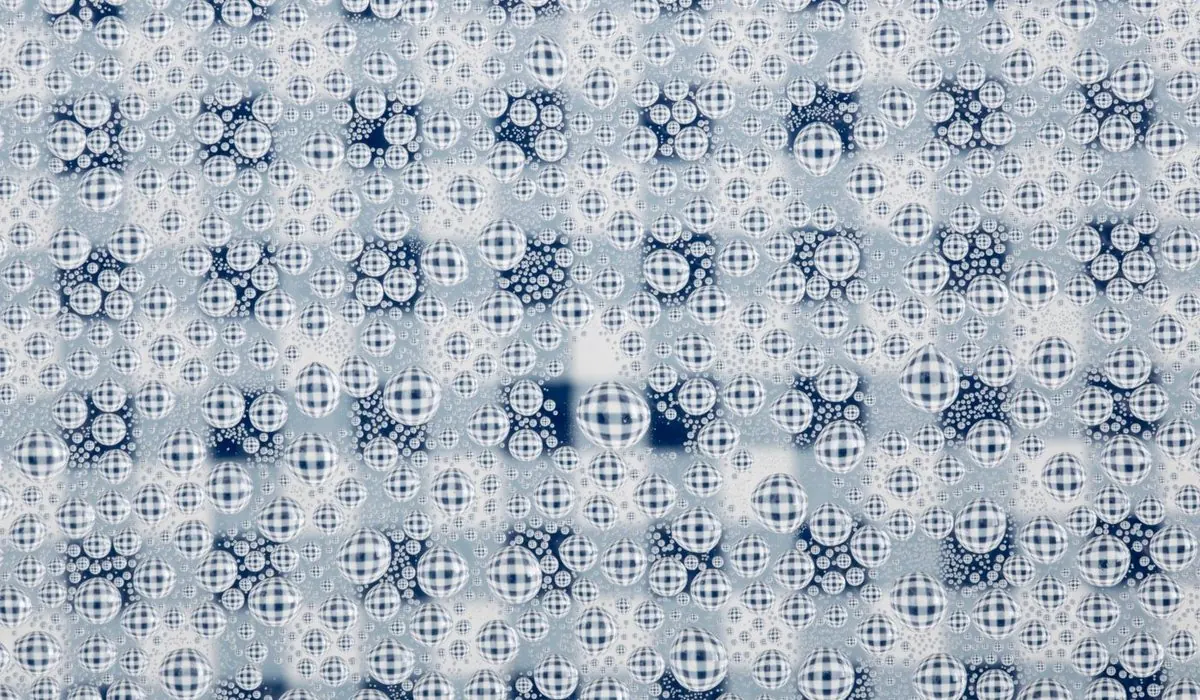
Taped seams and water repellency, the details that give a jacket away
A 20,000 mm jacket without taped seams lets water in. Every needle hole is a hole. On a real rain jacket, a waterproof tape is heat-bonded inside, along every seam. Turn the jacket inside out in the shop. If you see smooth strips along the seams, they are taped.
Zips matter too. A coated waterproof zip or one protected by a storm flap stops water entering at the centre, where rain runs down. Chest pockets without a flap are often the first entry point.
Then there is the water-repellent finish, the surface treatment that makes water bead. It does not make the jacket waterproof, it stops the outer fabric from soaking up water, which would block breathability. It wears off with rubbing and washing. A spell in the dryer on low heat or a cool iron, if the label allows, reactivates it. Otherwise, a spray-on product replaces it.
These treatments long relied on PFAS, fluorinated compounds that persist in the environment. France banned their use in most clothing from 1 January 2026, and brands have switched to fluorine-free repellents, slightly less durable. Our article on organic vs recycled cotton looks at the impact of materials, and our materials section covers certifications.
Which waterproof rating for your use
For walking in town
5,000 to 10,000 mm is enough, with taped seams. A coated fabric or a two-layer membrane does the job very well. No need to pay for three layers to get to the office.
For daily cycling
Aim for 10,000 mm minimum and good breathability, above 10,000 g. Bag straps and head-on rain increase pressure on the fabric, and effort makes you sweat. A 2.5-layer membrane is the right choice. Our cycling backpack guide completes the kit.
For hiking and the mountains
20,000 mm and a three-layer membrane. Rain lasts for hours there, the pack is heavy and there is nowhere to shelter. It is the only use that justifies jackets above 400 euros.
For a winter parka
A two-layer membrane with insulation, from 5,000 to 15,000 mm, is fine in town. Warmth matters as much as waterproofing, and our guide parka, puffer or wool coat helps you decide. Models on the market are ranked in our best men's coat brands.
Our advice
For the city, a jacket of 5,000 to 10,000 mm with taped seams is enough. Seams matter more than the number.
Go up to 10,000 mm with good breathability for cycling, and 20,000 mm in three layers for the mountains. And reactivate the water repellency twice a season, the single habit that most extends the life of a rain jacket.
Frequently asked questions
What waterproof rating do you need for a rain jacket in town?
5,000 to 10,000 mm of hydrostatic head is enough for the city, provided the seams are taped. A coated fabric or two-layer membrane does the job very well. 20,000 mm is justified in the mountains.
What does 10K/10K mean on a jacket?
The first 10K indicates a hydrostatic head of 10,000 mm, very good waterproofing. The second indicates breathability of 10,000 g of vapour released per square metre over 24 hours, a jacket that breathes well. It is a good level for the city and cycling.
Is a water-repellent jacket waterproof?
No. Water repellency makes water bead on the surface and handles drizzle or a short shower. In long rain, water eventually gets through. Only a membrane, a coating or wax, with taped seams, makes a jacket waterproof.
How can you tell if a jacket's seams are taped?
Turn the jacket inside out. Smooth strips bonded along every inside seam indicate taped or heat-sealed seams. Without them, water will get through the needle holes, whatever the hydrostatic head of the fabric.
How do you reactivate a jacket's water repellency?
A spell in the dryer on low heat or a cool iron through a cloth reactivates the treatment, if the label allows. When water still spreads over the fabric, a spray-on or wash-in repellent replaces it.
Membrane or coated fabric, which should you choose?
A membrane breathes better and suits effort, such as cycling or brisk walking. Polyurethane-coated fabric is more waterproof for its price but breathes little, which suits short trips. On our grid, the 2.5-layer membrane scores 8.3/10 and coated fabric 7.6/10.
Our method
The data in this guide is public, and each item can be checked at its source.
- Prices are recorded on the brands' official websites in October 2026, excluding promo codes and sales.
- Compositions, recycled material percentages and places of manufacture are those shown on product pages and in the reports published by the brands.
- Durability is assessed from verified customer reviews that mention wear, pilling, sole separation or fading.
- The labels cited (B Corp, GOTS, OEKO-TEX, GRS, Fair Wear) are checked against the public registers of the certifying bodies.
- Services that extend product life (repair, take-back, second hand) are recorded from the brands' official pages.
Sources

About the author
Textile engineer
Léa Fontaine graduated from ENSAIT, the textile engineering school in Roubaix. She spent six years in product development for luggage and technical clothing manufacturers, where she ran abrasion and colourfastness tests before production. At Mode Durable she covers materials, recycling processes and certifications, which she checks against the register of the body that issues them.